

Welcome to Insight into Health, my radio show on listener-supported KSVY 91.3, where I explore ways to make healthy living realistic, enjoyable, and sustainable. I am your host, Allison McKeany, and these are the show notes for the live radio show that aired on November 10th, 2025.
Listen to the episode:
Beyond the What:
I love getting my labs done. For me, it’s like getting clues on a treasure map. Each number offers a hint as to how my body is functioning and how I can fine-tune what I’m doing to reach my own health goals.
This year, I was especially ready for my updated labs because I’ve been feeling a little more tired and a little less motivated, and I wondered if it might be related to a recurrence of iron deficiency anemia.
And while the results didn’t show anemia, they did show that I’m iron-deficient.
You read that right. Iron deficiency and anemia are related but not the same thing
Iron deficiency is having inadequate iron stores. Iron is needed to make hemoglobin, the part of red blood cells that carries oxygen throughout the body.
Anemia develops when iron stores stay low and start to prevent adequate hemoglobin production. Less hemoglobin = decreased circulating oxygen = fatigue and other symptoms.
When I reviewed my own results, I was mostly interested in my levels of ferritin, hemoglobin, and hematocrit:
Ferritin is a marker of how much iron is stored in the body and is often the first thing to drop on the path to iron deficiency.
Hemoglobin and hematocrit both decrease after prolonged iron deficiency and help to diagnose anemia.
In my case, my ferritin was low, but my hemoglobin and hematocrit were within the normal range. I have iron deficiency without anemia. In other words, I caught it early and have time to increase my iron stores to prevent progressing to anemia.
So why is my iron low?
The first step is always to rule out blood loss, especially from the gastrointestinal tract or, for menstruating women, from heavy periods. I’ve already contacted my doctor to submit a stool sample; results TBD.
If excess blood loss is ruled out, the next step is to look at intake and absorption. In other words, to see how much iron I’m eating and how well my body can use it.
Food-based sources of iron are not all created equal:
Heme iron is found in animal sources, such as red meat, poultry, and fish. Up to 35% of heme iron is absorbed (and usable!) by the body. This is a good thing and something I need to consider. While I do eat poultry and fish, I haven’t eaten red meat since I was a teenager, and red meat is one of the best sources of heme iron.
Non-heme iron is found in plant sources, such as beans, lentils, quinoa, and spinach, but is harder for the body to absorb. Believe it or not, only 3-5% of the iron in these foods is typically usable to the body. These foods make up a large part of my diet and do me a lot of good. Except for when it comes to my iron deficiency, that is.
Iron absorption is also affected by other foods and ingredients.
Some foods decrease how well it is absorbed:
Tannins in black and green tea, as well as polyphenols in coffee, bind to iron and reduce absorption. So, my habit of sipping on black tea or coffee throughout the morning and then switching to green tea until early afternoon could be working against me.
The Greek yogurt and cottage cheese that I consume a couple of times a day in an effort to support my bone health and protein intake? Well, calcium also interferes with iron absorption.
And one superstar nutrient helps to increase iron absorption:
Vitamin C can double or even triple the absorption of non-heme iron. In fact, more and more doctors are prescribing iron supplements along with instructions to take them with Vitamin C-rich foods or a Vitamin C supplement.
So, what’s next for me?
After following up with my doctor to rule out any blood loss (which I don’t expect), I’m going to consider an iron supplement:
Supplement recommendations have evolved quite a bit in recent years. Instead of taking high doses every day, which can sometimes cause stomach upset and constipation, research now suggests that taking iron supplements every other day, along with a source of Vitamin C, reduces side effects and is equally effective.
At the same time, I’m going to experiment with my dietary habits so I can prevent iron deficiency in the future:
Separate coffee and tea drinking from meals by at least an hour.
Consume iron-rich foods, apart from dairy products.
Include more foods high in Vitamin C in my routine, such as citrus fruits, bell peppers, strawberries, and broccoli.
Finally, I’ll be asking my doctor to order repeat iron panel studies in 3-6 months to determine if my plan is working and to determine when I can stop the supplement. Iron isn’t safe to supplement indefinitely, so monitoring with the help of your doctor is incredibly important.
And, as always, please remember that your needs may be different depending on your age, diet, menstrual cycle, and health status, so it’s always best to review your specific labs with a healthcare provider or dietitian. The information provided here is informational and educational, and not intended to be health or medical advice.
Let’s Talk: Maggie La Rochelle
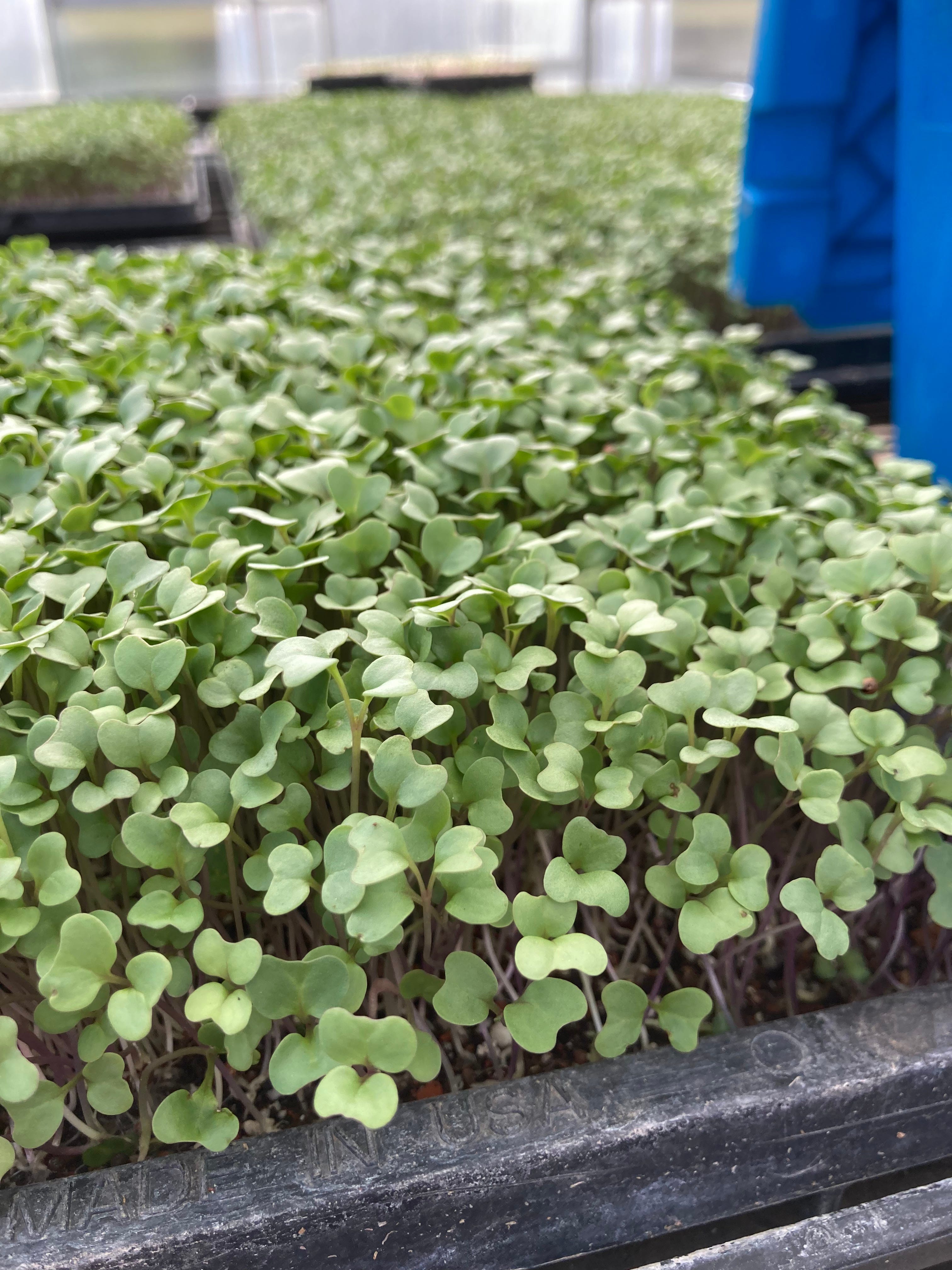
I was joined by Maggie La Rochelle of Sunray Farm, located right here in Sonoma. We talked about the “Sonoma moment” when I realized that, not only do I purchase her lettuces and microgreens at Sonoma’s Friday morning farmer’s market, but that we are also swimmers and swam in the same open water race earlier this summer.
Maggie told the story of how Sunray Farm came to be, her farming philosophy (“stewardship” is the word that stuck with me), and answered my many questions about how things work on the farm.
Plus! I learned the difference between sprouts and microgreens (Sprouts are sprouted seeds, microgreens are young plants harvested after they’ve developed their first leaves):
Here’s What I’m… Harvesting
I’ve been busy gleaning late-fall produce as part of the extrafood.org glean team. Right now, we are busy harvesting persimmons (more on those next week) and quince.
What is quince?
Quince is a bright yellow fruit that looks like a cross between an apple and a pear, with a soft white fuzz covering its waxy skin.

Raw quince is hard, sour, and astringent, so it’s not typically eaten fresh, but it has a wonderful fragrance, like honey and flowers.
Thanks to its high pectin content, quince is excellent for making jams, jellies, and other sweet desserts.
I’ve been experimenting with quince in my own kitchen and will be posting later this week on putyourfoodtowork.com about what I’ve learned. If nothing else, my bowl of raw quince will make my kitchen smell amazing.
Thanks for being here,
~Allison
I have had iron deficiency and/or anemia most of my adult life. About to embark on another round of labs to see if my strategy is working. Much of this info tracks with what I’ve been told plus some new info. Thanks! I just learned about the calcium one recently. Separating my supplement from my morning Greek yogurt has made it harder to remember to take later… habits are hard to make and harder to break… I’m working on a new ritual to remind me