

We often don’t appreciate our digestive system until something goes sideways. And when it does, it’s often not just physically uncomfortable. It can be frustrating, embarrassing, and isolating.
Digestion
Eating is just the first step in getting nutrients into your body.
Most of the protein, carbohydrate, and fat in a meal comes in pieces too large to pass through the lining of your intestines into your bloodstream, a process called absorption. While vitamins and minerals are already small, they’re often locked inside the food itself.
Digestion is the mechanical and chemical process that breaks food down so absorption can happen:
Proteins are broken down into amino acids (and small chains of two or three amino acids)
Carbohydrates are broken down into simple sugars, like glucose
Fats are broken down mainly into fatty acids and monoglycerides
Vitamins and minerals are freed from the food they’re bound in
Fiber is the exception here. While your body can’t digest it, the bacteria in your large intestine can and they turn it into compounds that help keep your gut healthy. More on that to come.
Digestive Tract vs. Digestive System:
Digestive tract: the long, continuous “tube” where food enters, is digested and absorbed, and anything left over is pushed out.
Digestive system: the digestive tract plus the organs that help with digestion, including the salivary glands, liver, gallbladder, and pancreas. The vagus nerve, a direct line between your brain and gut, helps control the whole process.
Mouth
Digestion begins before food even reaches your mouth. The sight, smell, and even the thought of food get your saliva and stomach acid flowing.
Chewing is mechanical digestion: each bite breaks food into smaller and smaller pieces.
As saliva mixes with food, an enzyme called amylase starts breaking down carbohydrates. This is chemical digestion. Digestive enzymes are like tiny scissors that “cut” long chains of nutrients into smaller bits, and more enzymes will join the digestive party soon.
Caring for your mouth and teeth is an underappreciated part of digestive health. Broken or missing teeth make chewing difficult, which may lead you to avoid harder-to-chew foods like veggies, nuts, and seeds, or to swallow them before they’re well chewed. That puts extra burden on the stomach and may cause digestive upset as poorly chewed food travels through the digestive tract.
On top of that, gum disease can increase inflammation throughout the body. It’s linked to a higher risk of heart disease, harder-to-control blood sugar, and slower healing.
Taking Care of Your Mouth
Fun fact: I once considered dental school. I didn’t go. So I’ll let Harvard Health be your guide to oral health.
Esophagus
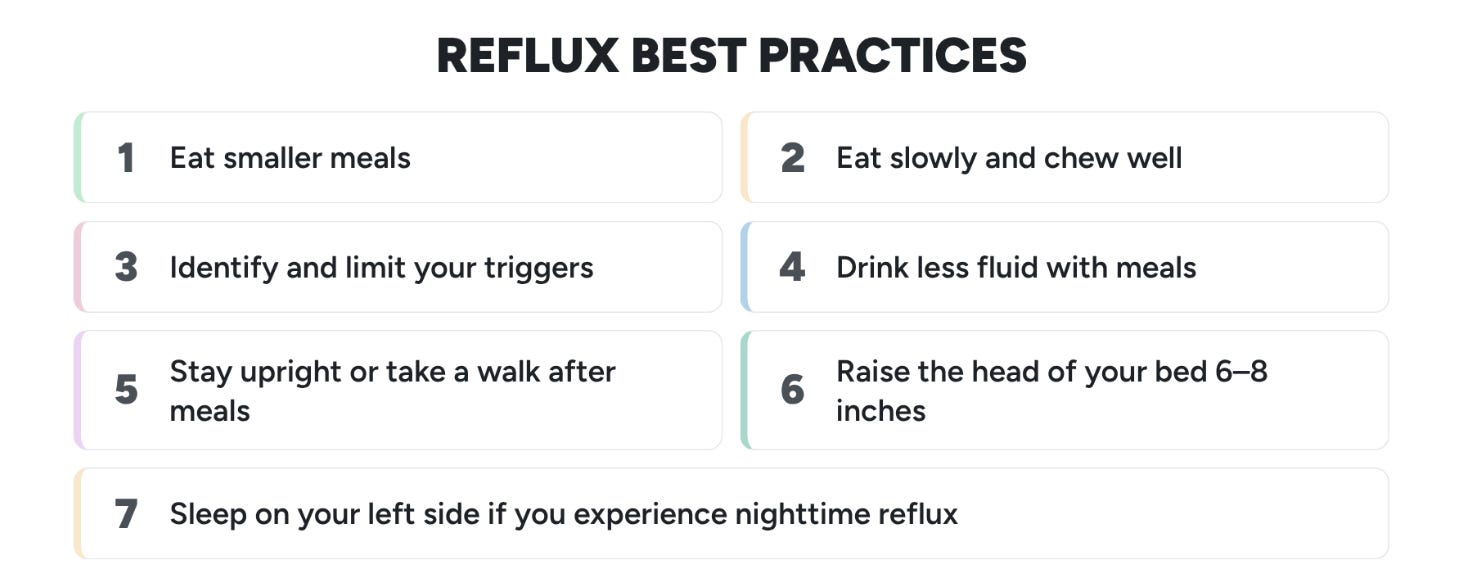
After you swallow, food travels down the esophagus to the stomach, passing through a ring of muscle called the lower esophageal sphincter (LES). The LES acts like a valve: it opens to let food in, then closes tightly behind it. If the LES doesn’t close properly, or relaxes at the wrong time, stomach contents, including acid, can flow backward into the esophagus.
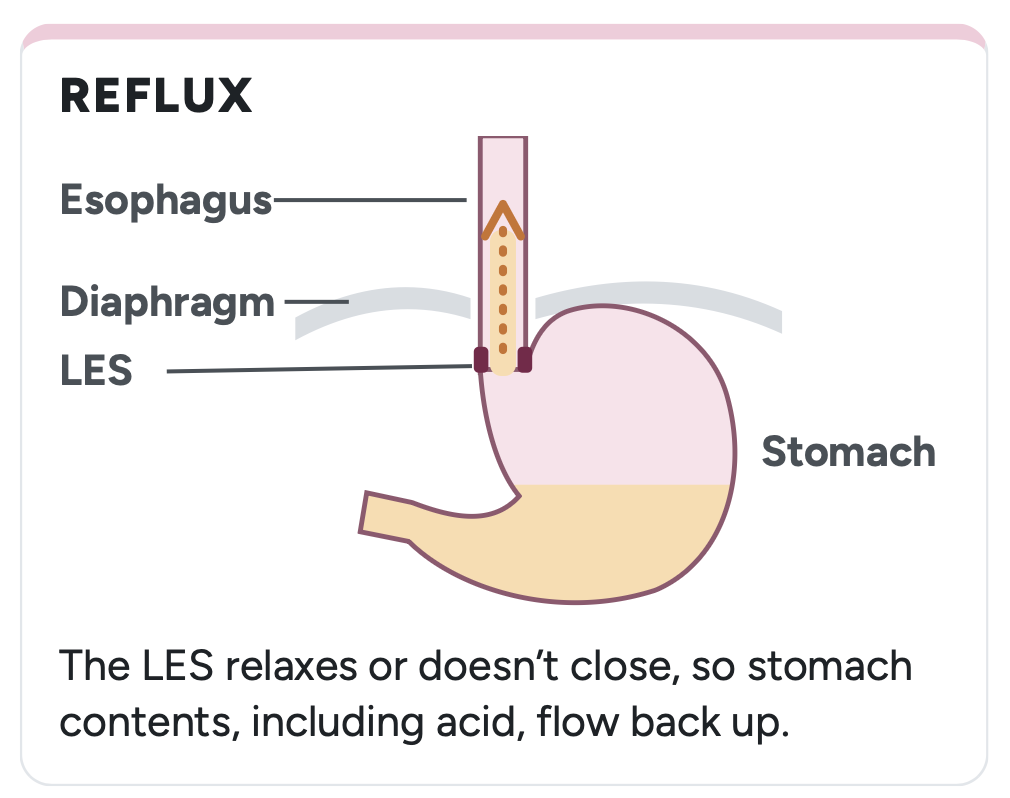
This is known as reflux. It’s one of the most common digestive complaints, and about 20% of US adults have GERD, its chronic form.
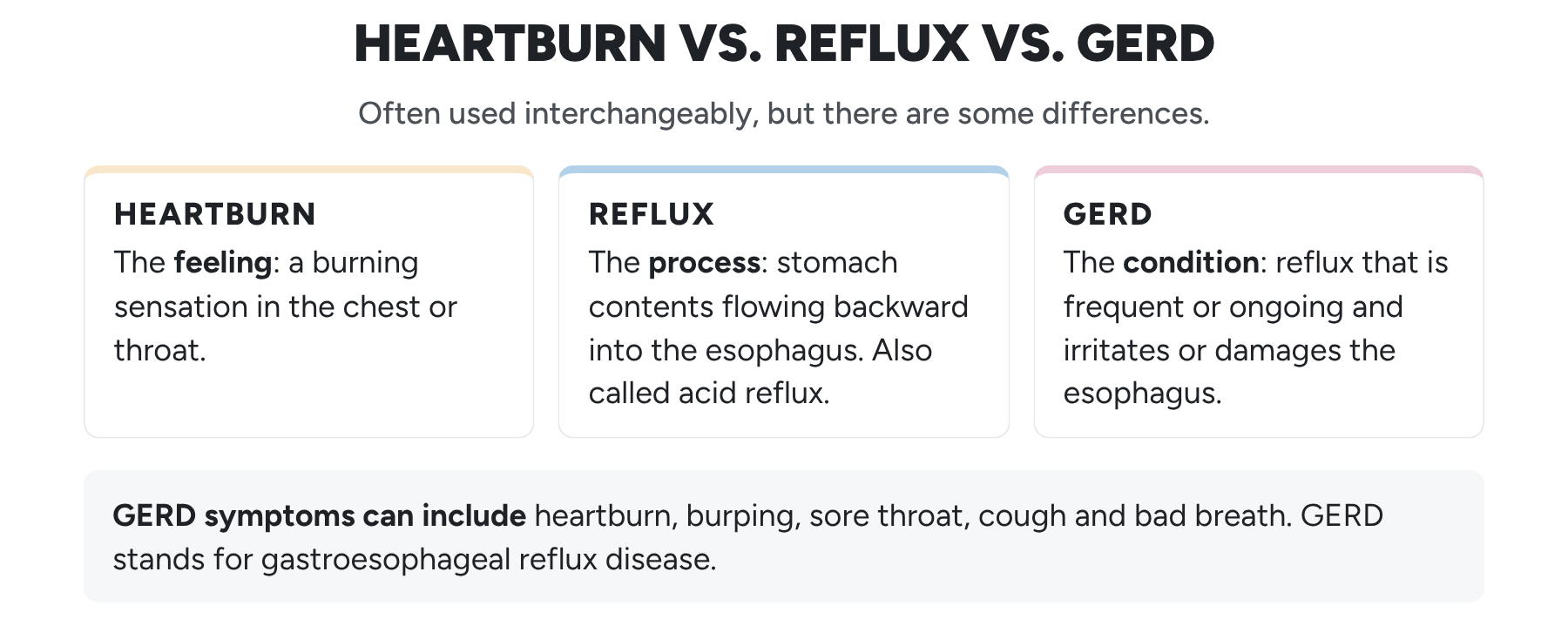
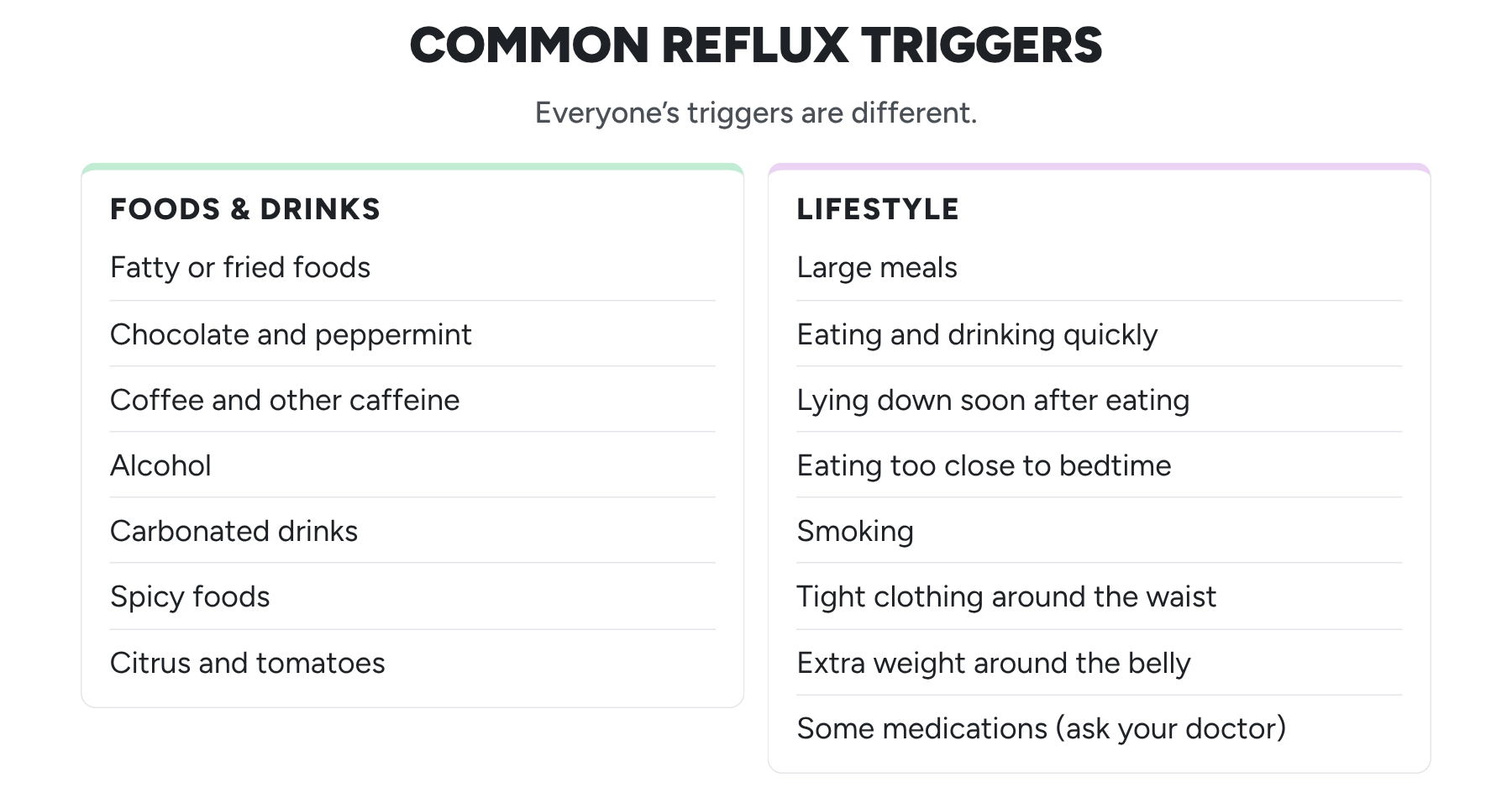
Reflux and GERD are more than just uncomfortable. Over time, untreated chronic reflux can lead to Barrett’s esophagus, a change in the lining of the esophagus that raises the risk of esophageal cancer.
Stomach
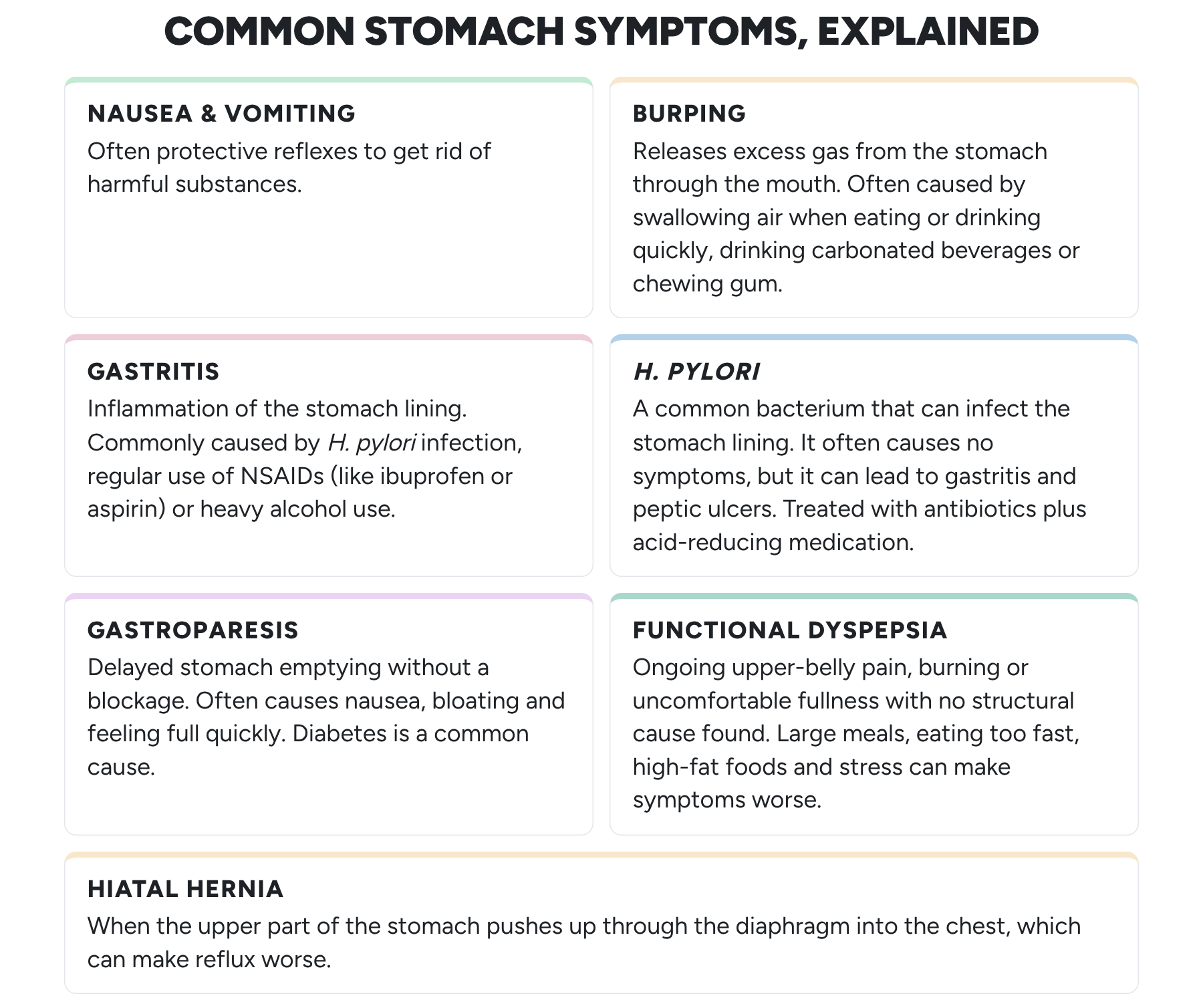
Chemical digestion really gets going in the stomach. Stomach acid kills potentially harmful pathogens and activates enzymes that break down protein, while the stomach’s muscular walls churn food into even smaller particles. The stomach then releases its contents, a little at a time, into the small intestine.
The stomach also plays a key role in absorbing vitamin B12. Stomach acid frees B12 from the food it’s bound to, and the stomach makes intrinsic factor, a protein that binds to B12 and is needed to absorb it later in the small intestine. This is why long-term use of acid-suppressing medication, or other changes to the stomach, can raise the risk of B12 deficiency.
The stomach also helps regulate hunger and fullness. As it fills, stretch receptors in the stomach wall signal fullness to the brain through the vagus nerve. When it’s empty, it releases ghrelin, the “hunger hormone.”1.
Small Intestine
When partially digested food leaves the stomach, it enters the small intestine, where most digestion and absorption happen.
Remember, digestion is the mechanical and chemical process of breaking food down into tiny pieces so the body can absorb it. Absorption is the process of moving nutrients from the digestive system into the bloodstream, which delivers them throughout the body.
The small intestine has three sections: the duodenum, jejunum, and ileum (I still remember “DJI,” my memorization trick from college).
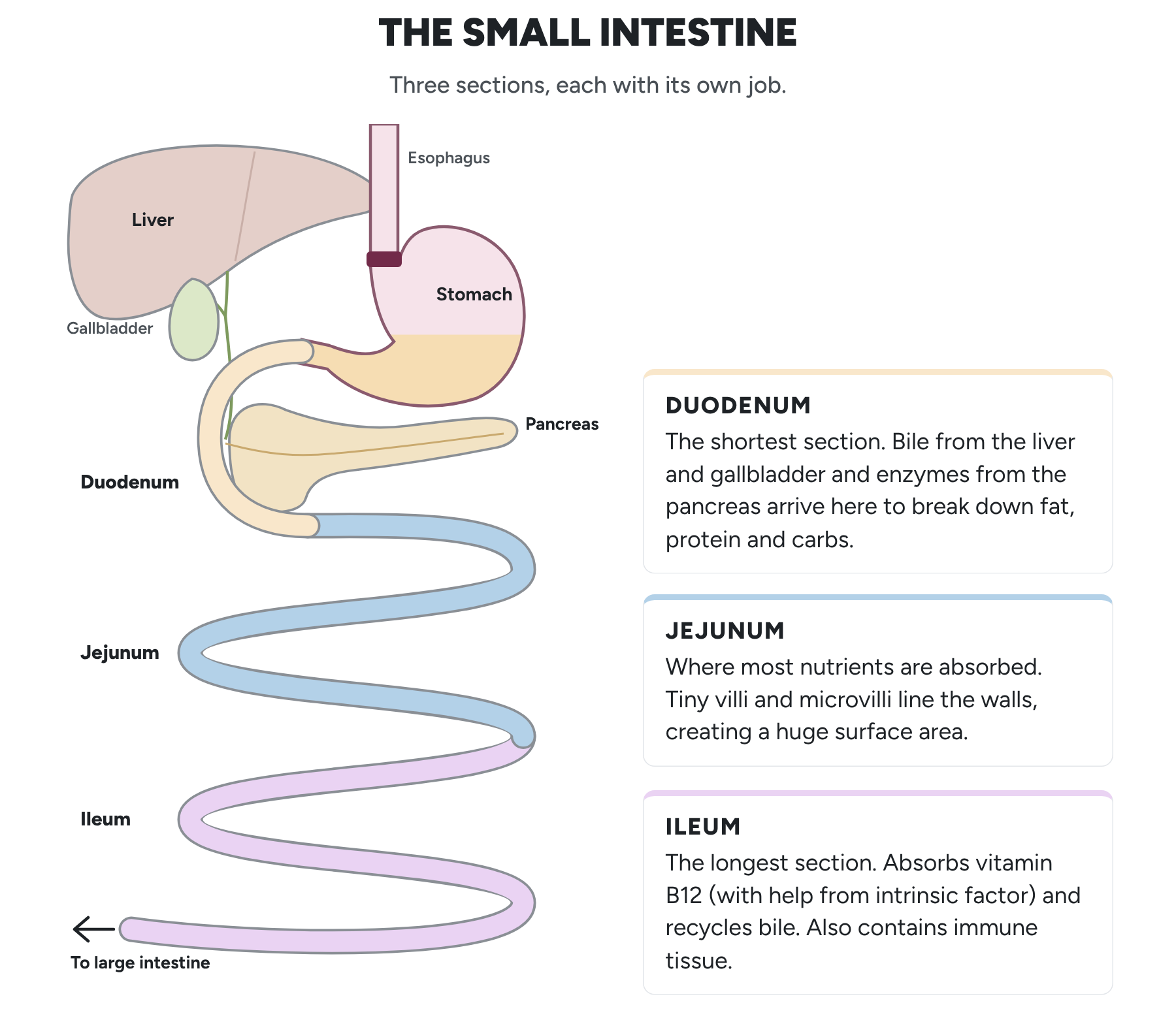
The liver, gallbladder, and pancreas all connect to the duodenum through small ducts, delivering more of the ingredients needed for chemical digestion.
Bile is made in the liver, stored in the gallbladder, and released when you eat to emulsify dietary fat. Emulsifying breaks fat into smaller droplets so enzymes can digest it more easily.
Without a gallbladder, bile trickles into the intestine continuously instead of being released in a concentrated burst. This may cause loose stools and urgency after high-fat meals.
Pancreatic enzymes digest carbohydrates (amylase), fats (lipase), and proteins (proteases). The pancreas also releases bicarbonate to neutralize stomach acid.
When the pancreas doesn’t make or deliver enough digestive enzymes, it’s called exocrine pancreatic insufficiency (EPI). It’s managed with pancreatic enzyme replacement therapy (PERT), taken with each meal and snack.
Conditions of the Small Intestine
Small Intestinal Bacterial Overgrowth (SIBO)
We all have health-promoting bacteria in our large intestine (more on the microbiome next time). But when too many bacteria build up in the small intestine, symptoms such as bloating, gas, diarrhea and/or constipation, abdominal pain, and nutrient deficiencies may occur. This is known as small intestinal bacterial overgrowth, or SIBO.
Many of these symptoms are “non-specific,” meaning they can have many causes, so SIBO isn’t diagnosed by symptoms alone. It’s diagnosed with a hydrogen and methane breath test and is typically treated with antibiotics.
SIBO often comes back, so preventing recurrence means addressing the underlying cause, such as slow gut motility, and being aware of dietary and supplement triggers (including probiotics!).
Celiac Disease:
Gluten sensitivity is more common than we once thought and has earned its own name: non-celiac gluten sensitivity. Celiac disease is different. It’s an autoimmune condition triggered by gluten, a protein found in wheat, barley, and rye.
Common symptoms include bloating, diarrhea, and/or constipation after eating gluten, though some people have few digestive symptoms at all. Over time, untreated celiac disease can lead to fatigue, anemia, bone loss, skin rashes, and weight loss.
Celiac disease is diagnosed with blood antibody tests and usually confirmed with an intestinal biopsy. Testing must happen while you’re still eating gluten, so don’t go gluten-free before you’re tested. The only treatment is a lifelong gluten-free diet.
Keep in mind that having one autoimmune condition raises the risk of others. With celiac disease, the most common are type 1 diabetes and autoimmune thyroid disease.
Food Intolerances
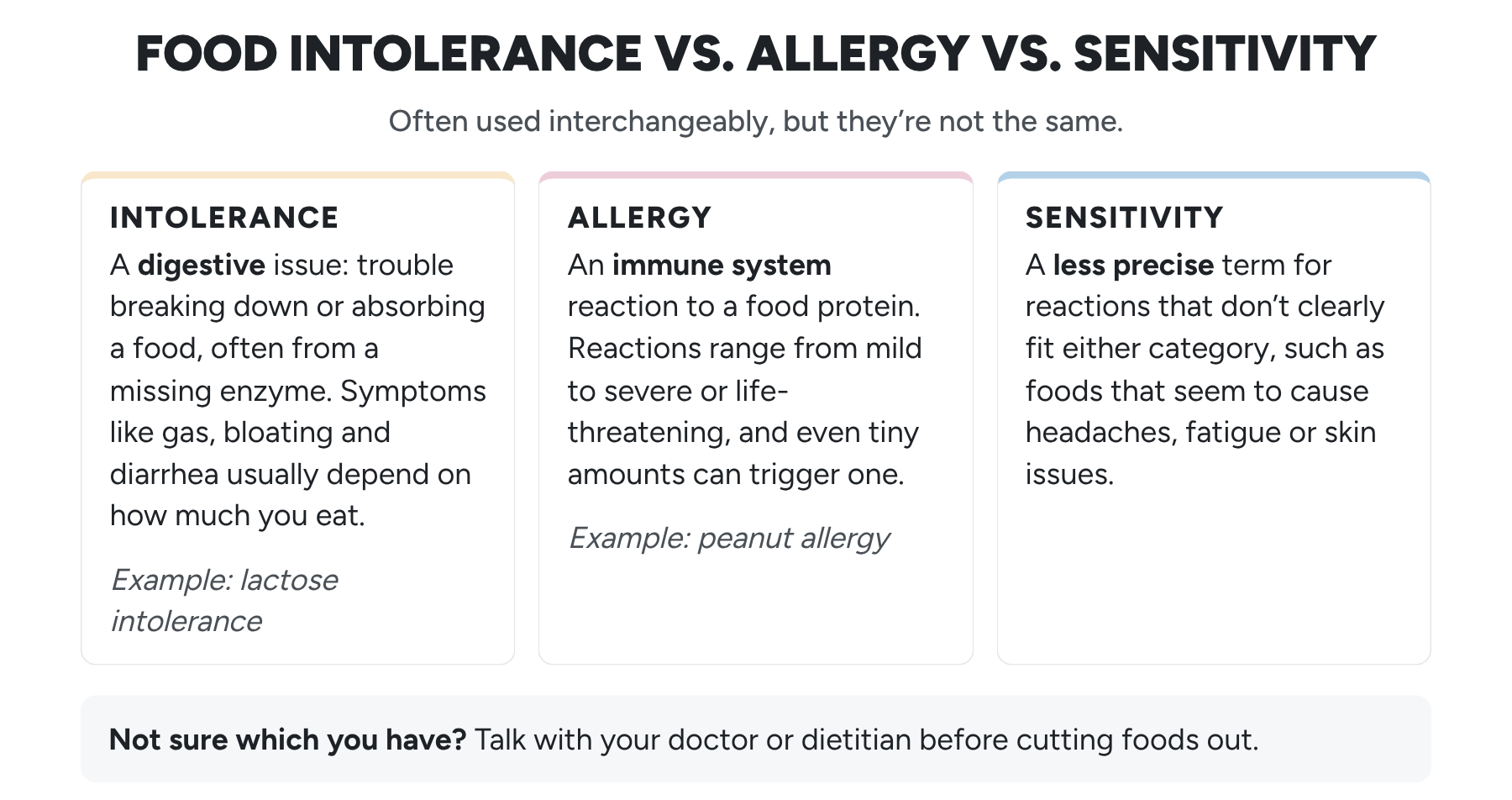
Food intolerances happen when the digestive system has trouble breaking down or absorbing a food. This may be due to a missing or inadequate enzyme (e.g., lactose intolerance) or poor absorption (like fructose or polyols). It is important to note, food intolerances are not food allergies:
Common Food Intolerances
Lactose intolerance: not enough lactase enzyme to break down lactose (milk sugar).
Fructose malabsorption: incomplete absorption of fructose (in fruit, honey, and high-fructose corn syrup).
Polyol (sugar alcohol) sensitivity: sorbitol, mannitol, xylitol, and other “-ols,” found naturally in foods like peaches, plums, apricots, cherries, apples, pears, mushrooms, and cauliflower, and in many “sugar-free” products.
FODMAPs: Fermentable Oligosaccharides, Disaccharides, Monosaccharides, And Polyols are a group of carbohydrates that some people have trouble digesting (more on these below).
When undigested food components reach the large intestine, gas, bloating, and/or diarrhea may occur.
Large Intestine/Colon
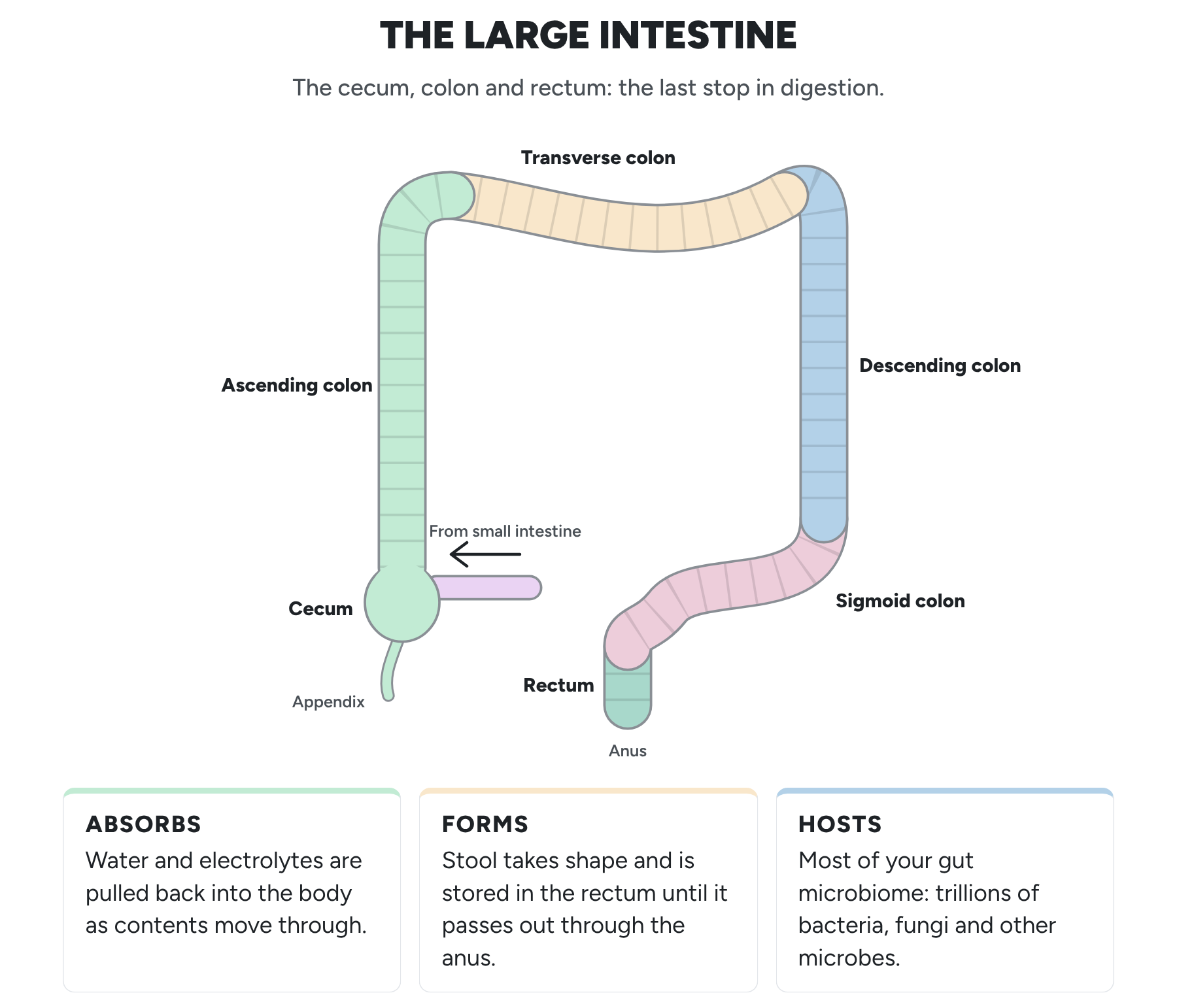
“Large intestine” and “colon” are often used interchangeably, but technically the large intestine has three parts: the cecum (a pouch where the small intestine empties into the large intestine), the colon, and the rectum (where stool is stored until it passes out through the anus).
The colon is the longest part of the large intestine and has four continuous sections. The ascending colon travels up the right side of your abdomen, the transverse colon crosses from right to left, the descending colon travels down the left side, and the sigmoid colon is an S-shaped curve that leads to the rectum.
Microbiome
The microbiome has many jobs, including fermenting undigested fiber into short-chain fatty acids, supporting immune function, and producing vitamins (like vitamin K and several B vitamins, such as biotin and folate).
The microbiome is also an integral part of the “gut-brain axis,” a two-way communication network between the digestive tract and the brain.
We still have a lot to learn about the microbiome and all the ways it affects health. We don’t know exactly what makes up a healthy microbiome, or whether there’s even an ideal one. What we do know is that a diverse, balanced community seems to matter more than any single “good” microbe.
Prebiotics, Probiotics, & Postbiotics — oh my!
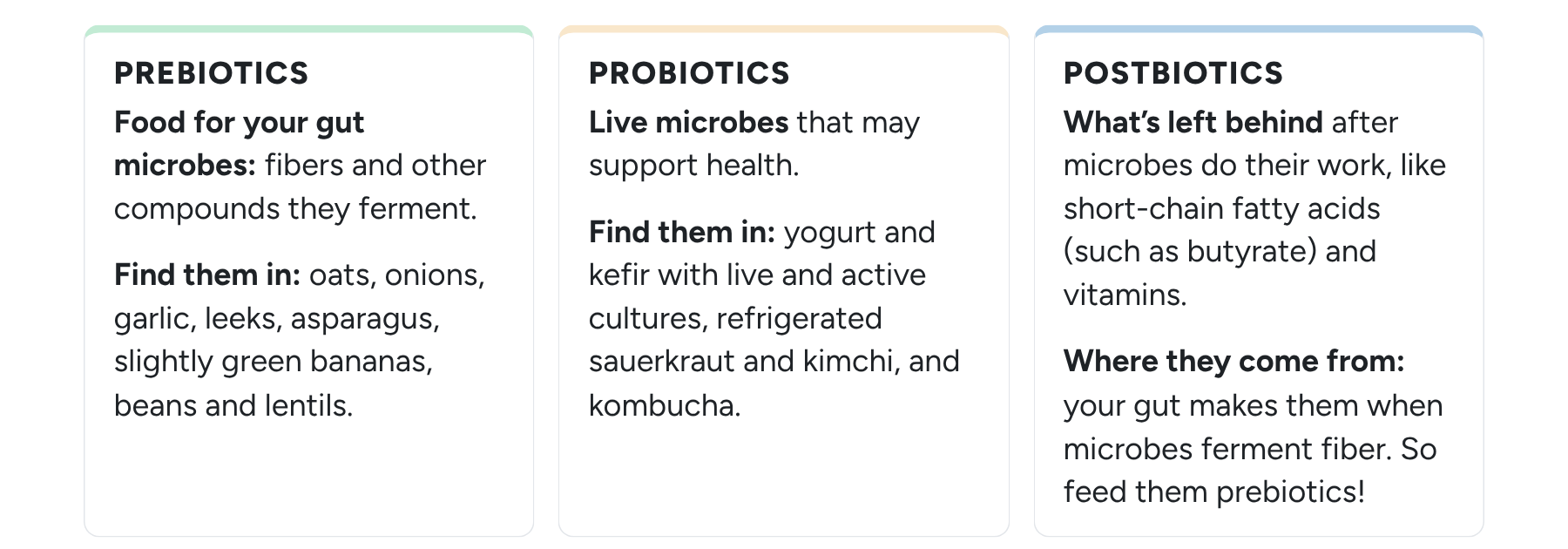
Talking about the microbiome inevitably brings up questions about the “biotics,” which refers to living things:
Probiotics: Food or Supplement?
If you read “probiotic” and think of a supplement, I don’t blame you. The claims on those bottles are enticing! (For more on navigating supplements, check out my Supplements 101 Health Guide.)
The truth is, we don’t know enough about most probiotics (which types, how much, which combinations, or for how long) to confidently recommend them for most conditions. There are exceptions, of course, such as using probiotic supplements to reduce the risk of antibiotic-associated diarrhea (there’s another “biotic” for ya).
For now, my recommendations for probiotic supplements are:
Food first. Include probiotic foods as often as possible (ideally daily), such as yogurt with live and active cultures, kefir, sauerkraut, kimchi, and kombucha. For sauerkraut and kimchi, choose refrigerated, unpasteurized versions, since heat processing kills the live microbes.
If you’re healthy, you probably don’t need a probiotic supplement.
If you’re interested in a probiotic for a health condition or digestive complaint, talk with your doctor. Feel free to share this resource on evidence-based probiotic use for various conditions with them.1
If you do use a probiotic supplement, remember it’s usually meant for a specific purpose and time frame, not forever. My Supplements 101 Health Guide walks you through how to tell whether a supplement is working and when you no longer need it.1
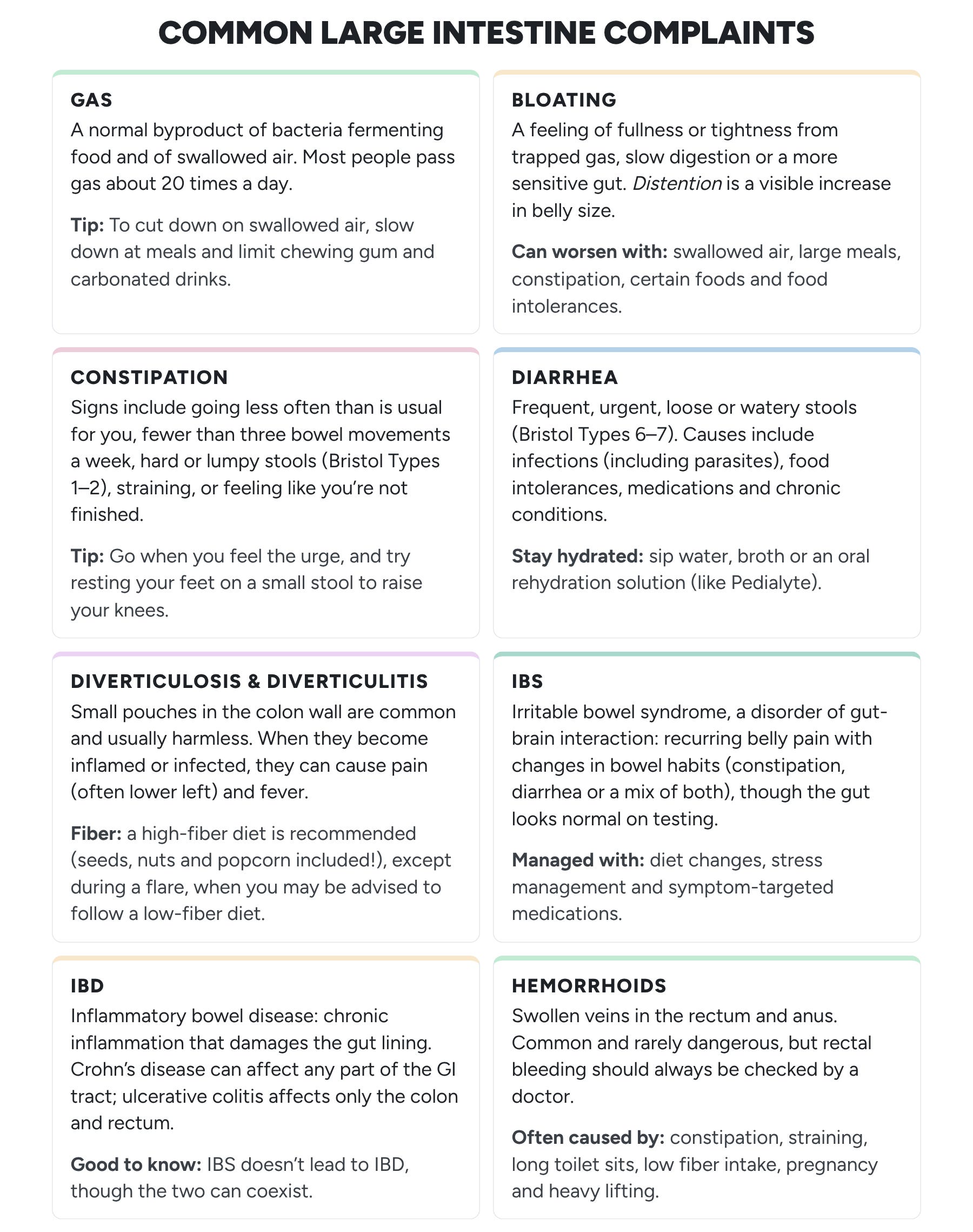
Common Large Intestine Complaints
Poop, Stool, Bowel Movement, Feces, #2, Passing Gas, Tooting, Breaking Wind…
Talking about what comes out of our bodies makes most people squirm, which, in my opinion, is why we’ve invented so many names to get around the discomfort.
Yet what comes out of your body is an important sign of what’s going on inside it. So please get comfortable looking at your poop, talk with your healthcare team about anything that concerns you, and remember…Everyone Poops!
Clinicians use the Bristol Stool Chart (caution, there are visuals!) to describe stool consistency, so using the chart’s numbers is an easy way to talk poop without the awkwardness. Regardless, look at your poop! It tells you and your care team a lot.
Fiber
Even though our bodies can’t digest fiber, its trip through the digestive system still offers plenty of benefits. And let me tell you… those benefits go waaay beyond bowel regularity.
First, a quick review: fiber isn’t just one thing. Like vitamins and minerals, it’s a category, and it can be sorted in a few ways. The same fiber can even fit more than one category:
1. Solubility (what does the fiber do in water?)
Soluble Fibers
Soluble fibers dissolve in water and form a gel-like substance. This gel softens stool, slows digestion, and keeps you full longer. (Think of foods like oats and beans, which change when sitting in water.)
Insoluble Fibers
Insoluble fibers don’t dissolve in water. Instead, they add bulk and move through the digestive tract, supporting bowel regularity. (Think of foods like most vegetables and fruit skins, which don’t change when sitting in water.)
2. Fermentability (what does the microbiome do with it?)
Prebiotic Fibers
Prebiotics are fibers your body can’t digest but your gut bacteria can. When these bacteria ferment prebiotics, many of the byproducts are beneficial for health.
Prebiotic fibers are mostly soluble, but some insoluble fibers and resistant starch can also act as prebiotics. Examples include onion, garlic, leeks, and asparagus, which provide especially good fuel for those bacteria.
Resistant Starch
While not technically a fiber, resistant starch acts like a prebiotic fiber in the body. After potatoes, rice, and semolina pasta are cooked and cooled2, some of their starch is transformed into resistant starch. This is because it “resists” digestion in the small intestine and provides a food source for the microbiome. Plus, because less carbohydrate is absorbed, resistant starch has less impact on blood sugar.
3. Fiber-ish
FODMAPs
As the first word in the acronym implies, Fermentable Oligosaccharides, Disaccharides, Monosaccharides, And Polyols (FODMAPs) are short-chain carbohydrates that are poorly absorbed in the small intestine and then fermented by gut bacteria. Here are examples of each FODMAP category:
Oligosaccharides: wheat, onion, garlic, beans, and lentils
Disaccharides: lactose in milk and other dairy products
Monosaccharides: honey, apples, and mango
Polyols: sugar alcohols in stone fruits and sugar-free products
As you can see, some FODMAPs are fibers, and some are not.
I include FODMAPs here because a “low FODMAP” diet is a relatively new intervention for IBS and has brought a ton of confusion along with it.
Most people can tolerate FODMAPs. If this is true for you, continue to enjoy! The byproducts of FODMAP fermentation by the microbiome have a growing list of health benefits.
However, for those with IBS, certain FODMAPs may cause gas, bloating, and discomfort. If this is you, please, please, please know this before you try a low FODMAP diet: it is meant to be a short-term elimination diet to help you identify IBS triggers, not a long-term super-strict diet.
Plus, it is complicated to implement on your own!
Frustratingly, many people are given a handout and told to “try a low FODMAP diet” without guidance or support. The patients who eventually make their way to me have either given up trying or have been on a diet so restrictive for so long that I am concerned about nutrient deficiencies.
So please, keep my fellow dietitians and ask for support if this is something you’d like to try.
The Benefits of Fiber
Keeps stools soft and regular
Ok, yes, fiber has been typecast as the poop nutrient, and for good reason! If you’ve never had trouble pooping, consider yourself lucky, because the ability to have easy bowel movements is something too many people take for granted.
Fiber helps you stay regular in a couple of ways. First, soluble fibers absorb water, keeping stool soft and easy to pass. Second, insoluble fibers increase the bulk moving through the digestive tract, which stimulates the muscles of the digestive system and keeps everything moving.
Supports satiety
Fiber-rich foods take longer to eat and add volume to your meals, helping you stay satisfied. The gel formed by the soluble fibers also slows how quickly food leaves the stomach. You can amplify this effect by pairing fiber-rich foods with lean proteins and healthy fats.
Manages blood sugar
The gel formed by soluble fiber slows how quickly carbohydrates are digested and absorbed, which helps prevent sharp spikes in blood sugar after eating. Over time, diets higher in fiber are linked to better blood sugar control and a lower risk of type 2 diabetes.
Lowers cholesterol
Soluble fibers, such as the beta-glucan in oats and the fiber in beans and psyllium, bind to bile acids in the digestive tract and carry them out of the body in stool. Your liver then pulls cholesterol from the blood to make more bile, which lowers circulating LDL cholesterol levels.
Decreases colorectal cancer risk
Higher fiber intake, especially from whole grains, is associated with a lower risk of colorectal cancer. This may be because fiber speeds the movement of stool through the colon, bulks and dilutes its contents, and feeds the microbiome.
Feeds your gut microbiome
The bacteria in your microbiome rely on fiber as their main fuel. When they ferment it, they produce short-chain fatty acids like butyrate, which support the health of the colon lining and may play a role in immune function and inflammation. A variety of fiber-rich plant foods supports a more diverse microbiome, which is why eating many different plants matters more than relying on a single source.
Comes with an entourage
Finally, fiber-rich foods are often packaged with other important nutrients: vitamins, minerals, phytochemicals. So eating those fruits, veggies, whole grains, nuts, seeds, and lentils brings a whole lot more than fiber to the party. Cheers!
Fiber in Common Foods
The truth is, most foods contain a mix of different fiber types, as you can see in the chart of common fiber-rich foods below. For most people, variety is key. Eating lots of different fiber-rich foods provides lots of different fiber types, which can contribute to the impressive list of benefits outlined above.
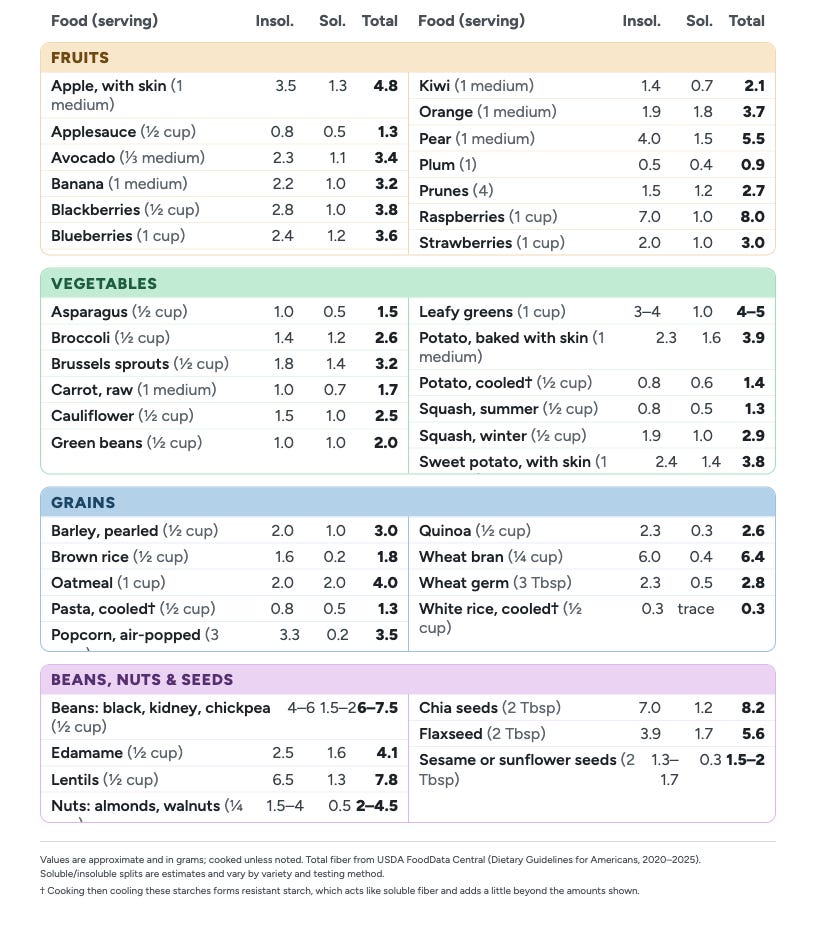
While many people can enjoy a wide range of fiber-rich foods, those with digestive problems may need to be a little more selective. If this is you, please work with your doctor, and potentially a gastroenterologist and dietitian, to determine whether changing the types or amounts of fiber you eat will help.
How Much Fiber Do You Need?
Most guidelines recommend about 25 grams of fiber per day for women and 38 grams per day for men. However, many experts agree that if tolerated, more may be better, and not only because of the fiber itself. It may also be because of the countless other nutrients in fiber-rich foods that work their magic together.
Unfortunately, most adults in the US get only about half of the minimum recommendation. If this is you, please take an extra look at the chart above. Adding an extra serving of fruit, beans, or nuts each day can go a long way toward getting the many benefits that fiber-rich foods provide.
But… easy does it. Adding too much fiber at once can cause gas and bloating, so start slow. Add a new fiber-rich food to your typical intake every few days to let your digestive system and microbiome adjust.
The Perfect Pairing
As you now know, soluble fiber works by absorbing fluid to form a gel that softens stool, increases satiety, and helps manage blood sugar and cholesterol levels.
Yet, this also means that the benefits of soluble fiber depend on having enough fluid to work.
Why is this? I like to think of soluble fiber as a kitchen sponge: dry and hard when left out on the counter but soft and pliable once it gets wet. Not enough fluid means dry, hard stools and sluggish digestion. Not fun.
How much
Several factors determine how much fluid an individual needs3, including gender, activity level, and medical conditions, among others.
Typical recommendations range from about 2.1 L per day for women to nearly 3 L per day for men. (For context, 2.1 L is about 9 cups or 71 oz, and 3 L is about 13 cups or 100 oz.)
I talk about fluid a lot with my patients, and I only recently realized that when I say “fluid,” many hear “water.” For those who aren’t big water drinkers, hearing they need over 2 L per day can be overwhelming!
The good news is that ALL FLUIDS COUNT. You heard that right. Water counts. Coffee counts. Tea counts. Milk counts. Carbonated beverages count. Heck, even juices and sugar-sweetened and artificially sweetened beverages count.
I say this to get their attention, and it usually works. Their facial expressions alone show me that they’re relieved they don’t have to force themselves to guzzle bottles of water.
Then I explain that, based on their situation, we may need to modify how much of that fluid comes from caffeine, sugar, carbonation, or whatever else. But the message doesn’t change: all fluids count! Stay tuned for a whole post dedicated to fluids and hydration!
When to be careful: Fiber isn’t one-size-fits-all.
IBS: Some fibers ferment quickly and can trigger gas and bloating. Soluble, less fermentable fibers such as psyllium are often better tolerated than wheat bran. A dietitian can help you sort out what works.
IBD (Crohn’s disease or ulcerative colitis): During a flare, or if you have a narrowed bowel, high-fiber foods may need to be limited. Follow your care team’s guidance.
SIBO: Fermentable fibers, including prebiotics and high FODMAP foods, can feed bacteria in the small intestine and worsen gas and bloating. Tolerance varies a lot, so work with a dietitian to adjust types and amounts rather than cutting fiber across the board.
Diverticulitis: During an active flare, your care team may recommend temporarily limiting fiber or following a clear liquid diet. Fiber is typically added back gradually once symptoms settle, so follow your care team’s guidance.
Diverticulosis: Having pouches in the colon wall is not a reason to avoid fiber. Higher fiber intake is linked to a lower risk of diverticulitis flare. The old advice to avoid nuts, seeds, and popcorn is not supported by current evidence.
Bowel surgery, strictures, or swallowing problems: Ask your doctor before increasing fiber.
Medications: Fiber can affect how some medications are absorbed, so ask your pharmacist about timing.
New bleeding, black stools, ongoing changes in bowel habits, or unexplained weight loss are worth a call to your doctor. These shouldn’t be treated with fiber alone.
The take-home
Fiber deserves its time in the spotlight. From digestive health to metabolic health to cardiovascular health, plant-based fiber-rich foods have so much to offer for many of us.
So go out there and enjoy! (slowly, of course 😉)
Thanks for being here,
~Allison
This information is meant to inform and inspire and is not personal health or medical advice. Please speak with your healthcare team about what is right for you.
People who are immunocompromised, critically ill, or have central venous catheters should check with a provider before using any probiotic. Probiotics are also not recommended for those with a history of SIBO.
Follow guidelines to properly cool these foods to avoid foodborne illness.
“Caring for your mouth and teeth is an underappreciated part of digestive health.” Chewing is the one step of digestion fully under our control. Slow the fork, and every organ downstream gets an easier job.