

We often refer to “digestion” or “gut health” as if it’s one thing, yet the reality is more complex, and more impressive, than that.
This is the first of a three-part series on digestion, digestive health, and the causes of common digestive complaints.
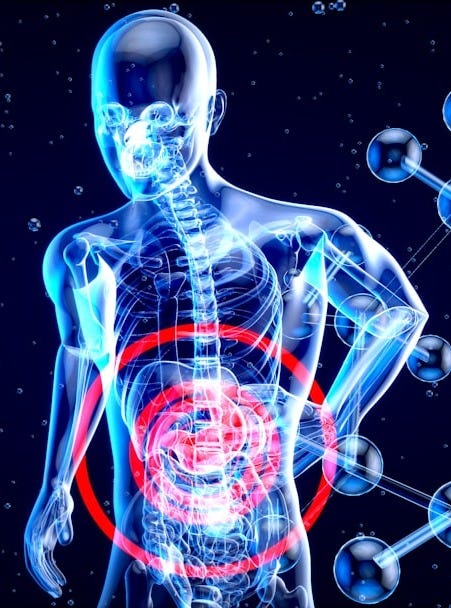
Digestion
Putting food into your mouth is the first of many steps to getting nutrients into your body.
The protein, carbohydrate, fat, vitamins, and minerals you eat during a meal are too large to pass through the lining of your intestines into your bloodstream, a process known as absorption.
Digestion is the mechanical and chemical process that makes that possible:
Proteins are broken down into amino acids
Carbohydrates are broken down into simple sugars (like glucose)
Fats are broken down into fatty acids and glycerol
Vitamins are freed from the food matrix they’re bound in
Digestive Tract vs. Digestive System:
Digestive tract refers to the nearly 30-foot “tube” where food enters, is digested and absorbed, and anything leftover is pushed out.
Digestive system refers to the digestive tract and other organs that aid digestion, including the salivary glands, liver, gallbladder, pancreas, and the vagus nerve.
Mouth

Digestion begins the moment food enters your mouth.
The act of chewing is known as physical digestion, where food is broken into smaller and smaller pieces with each bite.
When saliva mixes with food, amylase starts breaking down carbohydrates via chemical digestion. Amylase is an enzyme. Digestive enzymes are like tiny scissors that “cut” long strings of nutrients into smaller bits. More enzymes join the digestive party soon.
Taking care of your mouth and teeth is an underappreciated factor in digestive health. Broken or missing teeth can make chewing difficult, which leads to one of two problems: healthy, harder-to-chew foods (like veggies, nuts, seeds) get avoided altogether, or they get swallowed before being adequately chewed, putting extra burden on the stomach to do work the mouth should have already done.
On top of that, excess mouth bacteria can increase inflammation throughout the body, increasing the risk of heart disease, high blood sugar, and slowing the body’s healing capacity.
Taking Care of Your Mouth
Fun fact: I considered going to dental school. I didn’t. So here is what I have to say about keeping your mouth healthy:
Brush your teeth twice a day
Floss daily
Stay hydrated, though limit sugary and acidic foods and drinks
Avoid tobacco
Address teeth grinding
See a dentist regularly or as needed to address any bleeding, sensitivity, bad breath
Esophagus
After you swallow food, it travels down through the esophagus into the stomach, passing through a valve called the lower esophageal sphincter (LES). The LES’s job is to open to let food in and then close tightly after it passes through.
If the LES doesn’t close properly, or relaxes at the wrong time, stomach acid moves backward into the esophagus. This is known as reflux. It affects an estimated 20% of US adults and is the most common digestive complaint.
Heartburn vs. Reflux vs. GERD
While often used interchangeably, there are some slight differences:
Heartburn is the feeling of burning in the chest/throat
Reflux/Acid Reflux is the process of stomach contents flowing into the esophagus
Gastroesophageal Reflux Disease (GERD) is when reflux is chronic and causes irritation &/or damage to the esophagus, burping, sore throat, cough, bad breath
Reflux and GERD are more than just uncomfortable; untreated and unmonitored chronic reflux increases the risk of Barrett’s esophagus, which is a change to the lining of the esophagus associated with increased risk of esophageal cancer.
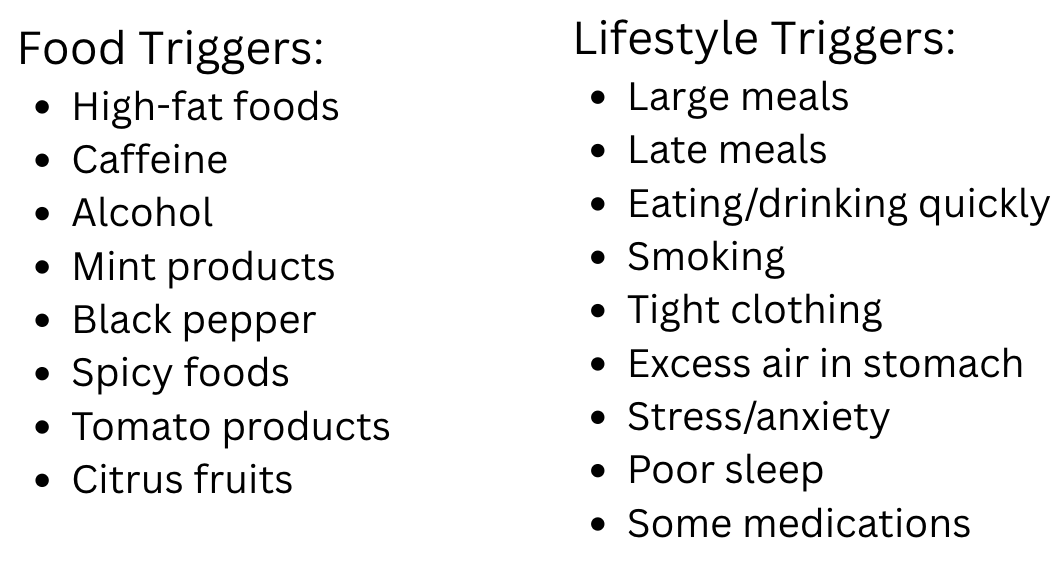
Reflux Triggers
There are common food and lifestyle factors that may trigger reflux, though everyone's triggers are different.
Reflux Best Practices
Smaller meals
Eat slowly & chew well
Identify & limit triggers
Less fluid with meals
Stay upright/move after meals
Raise head of bed 6-8 inches
Sleep on left side
Stomach

Chemical digestion really gets going in the stomach. Stomach acid kills potentially harmful pathogens and breaks food down into even smaller particles before releasing the contents into the small intestine.
The stomach is also where intrinsic factor is produced, which is a protein that binds to vitamin B12 and is required for its absorption later in the small intestine. This is why altering the stomach’s acidity or composition (for example, with long-term acid-suppressing medication) can raise the risk of vitamin B12 deficiency.
The stomach also plays a role in hunger and fullness. As it fills, stretch receptors (mechanoreceptors) in the stomach wall signal fullness to the brain via the vagus nerve1.
Common Stomach Symptoms, Explained
Nausea & vomiting are often protective reflexes to expel harmful substances
Burping releases excess gas from the stomach through the mouth, often caused by swallowing air from eating and drinking too quickly, carbonated beverages, or chewing gum
Gastritis is inflammation of the stomach lining, often triggered by excessive use of NSAIDs (like ibuprofen or aspirin) and/or alcohol
H. pylori is a bacterial infection causing ulcers in the stomach lining (peptic ulcers), treated with antibiotics
Gastroparesis is delayed stomach emptying, often causing bloating and nausea
Functional dyspepsia is the feeling of early fullness & abdominal pain when eating, often related to large meals, eating too fast, consuming high-fat foods, or stress
Hiatal hernia occurs when the stomach pushes through the diaphragm, often worsening reflux
Next week we head into the small and large intestine, where digestion and absorption really pick up speed. We’ll explore the microbiome and common causes for the dreaded gas, bloating, constipation, and diarrhea. Yay!
Thanks for being here,
~Allison
Please remember that this information is meant to educate and inspire but is not medical advice - please consult your healthcare team to determine what is most appropriate for you.
The vagus nerve calls for its own health guide!
This is a great piece, Allison! What an incredible collaboration of systems all organized to extract the essentials! Your explanations of the "Mouth to Middle" make me appreciate the "prep work" needed to get the most out of the food I put in my body -- thanks for this primer and guide! Can't wait for the next installment.