


You may be surprised that, as a Registered Dietitian, I sometimes talk about sleep before nutrition.
Chronically poor sleep increases the risk of nearly all areas of health:

What does “good” sleep even mean?
I define good sleep in terms of quantity (how much) and quality (how well).
Quantity: Most adults regularly need 7-9 hours of sleep per night, ideally continuously.
To figure out how much sleep you need, go to bed (and to sleep) at the same time every night for a week and let yourself wake up naturally — no alarms, pets, or partners. You may sleep more than 9 hours the first night or two if you are in sleep debt. The amount of sleep you get on the 6th and 7th night is a good indicator of your natural sleep needs.
Quality: How easily can you fall asleep? Do you typically stay asleep? If you wake up, how easy is it for you to fall back asleep? Do you feel refreshed in the hours after waking?
Sleep quality is subjective and difficult to evaluate outside of a sleep lab. Yet, it is probably the most important metric for an individual. Poor sleep quality (or the perception of it) affects how we think, how we feel, and how we show up for ourselves and others for the rest of the day.
What’s Your Chronotype?
I know this sounds like a Seventeen Magazine quiz, but stick with me here.
Chronotype refers to your preferred sleep timing, which is largely genetically determined. Think early bird (me) and night owl (my husband).
Note that chronotype is preferred, which is not necessarily consistent with the timing of your life responsibilities (work, school, etc.). This mismatch is a big driver of poor sleep quantity and quality.
Society has placed judgments on each end of the chronotype spectrum. As an early bird, I get teased for going to bed early, and many night owls are deemed “lazy” when they sleep in. Yet, there is no one best chronotype.
You likely already have an idea about your chronotype, but here is a quiz if you are curious (and no, not from Seventeen magazine).
To Track or Not to Track
I have learned to refine how I ask a patient about their sleep.
Instead of asking “How are you sleeping?”, which often gets the reflexive “good” response, I now ask “How do you describe your sleep?” The most common answers I get are “horrible” and “terrible” — words that speak volumes on their own.
Though more commonly, I am also hearing, “My phone says…”
While sleep trackers can certainly increase awareness about sleep duration and quality, there are some important factors to keep in mind to determine if they are right for you.
First, while sleep duration accuracy on common sleep-tracking devices continues to improve, they often have trouble evaluating the nuances of sleep stages (more on that next week).
Second, for some people, the use of sleep trackers may sabotage sleep because of the anxiety and obsession that come with data overwhelm. There is even a term for it: orthosomnia, which is the pursuit of perfect sleep data at the expense of actual sleep.
Third, the more we outsource how we feel to technology, the greater the risk we have of losing touch with… how we feel. And our bodies have a lot to tell us; it’s usually a matter of whether we listen.
That said, if using a sleep tracker helps you feel informed and empowered, keep using it.
If it leaves you lying awake wondering why your deep sleep percentage was low, it may be time to take a break.
How Does Sleep Happen?
1. Melatonin
I’m guessing you’ve heard of melatonin. It is the most common sleep supplement in the US.
Many people don’t realize that melatonin is naturally produced in our brains to help us fall asleep, yet it has little value in keeping us asleep.
Naturally produced melatonin is light-dependent, a system that evolved when sunrise, daylight, and sunset were the main drivers of our sleep-wake cycle.
The amount of light coming into our eyes directs melatonin production:
As light increases (think sunrise), melatonin production goes down
As light decreases (think sunset), melatonin production goes up

Disruptions to melatonin production because of artificial light exposure at night, such as lights in our homes and screens, and inadequate sunlight exposure during the day, are at the core of poor sleep for many.
2. Adenosine
Adenosine is the byproduct of energy metabolism (ATP for any biology folks out there). The longer you are awake, the more adenosine builds up in your brain. As the day goes on, adenosine slowly accumulates, which causes you to feel more tired. This is known as “sleep pressure.”
Getting a good night of sleep clears adenosine from the brain.
(Fun fact: Caffeine blocks your brain from recognizing that adenosine is there. That’s right, caffeine does not give you energy. It just tricks your body into not realizing how tired it is.)
Importantly, both adequate melatonin production and sleep pressure are required to fall asleep and stay asleep. Easier said than done, I know.
Your Hormones on Sleep
If you think that melatonin and adenosine are impressive/complicated/overwhelming…we are just getting started.
In Part 1 of this series, I shared that chronically poor sleep affects nearly every area of health: metabolic, cardiovascular, immune, mental, and more.
Why is that? How is sleep so powerful?
The answer has to do with more hormones. Hormones that follow sleep-wake cycles and are affected by poor sleep:
Cortisol is the “alert” hormone that gradually decreases throughout the day and spikes in the early morning to prepare for wakefulness. Poor sleep confuses cortisol production, often resulting in high levels at night, making it difficult to fall and stay asleep, and low levels in the morning, making it difficult to feel awake.
Leptin & Ghrelin are “appetite” hormones that play opposite roles. As leptin goes up after a meal, you feel full. On the other hand, ghrelin1 levels make you feel increasingly hungry the longer it’s been since a meal.
Insulin is the “energy shuttle” hormone, responsible for moving energy-rich blood glucose (blood “sugar”) from the bloodstream into the cells. Sleep deprivation makes insulin less effective, raising blood sugar and increasing the risk of Type 2 Diabetes and other metabolic-associated conditions.
Growth Hormone is the “repair” hormone, released during sleep to stimulate tissue repair, immune health, and metabolism. Poor sleep can impair recovery and healing.
I could go on, but I’ll spare you.
Foundations of Good Sleep
Morning sunlight — Even a few minutes of direct morning sunlight increases alertness by decreasing melatonin production and increasing alertness hormones. Set yourself up for an energized day and better sleep tonight.
Take your morning cup of coffee or tea on your porch, get out on a short walk with your furry friend, or simply step outside to hear the goings on.1
Simulate sunset — Sleep doesn’t happen like a light switch. Give your system a head start by reducing light in your environment 1-2 hours before bed so that melatonin production has time to ramp up in time for bedtime.
Turn off bright overhead lights, use dimmer switches or lower wattage light bulbs, and create a bedtime routine that doesn’t rely on screens.
Increase sleep pressure — Regular exercise helps promote that sleep pressure, establishes your circadian rhythm, and may decrease the stress and anxiety that often makes sleep difficult.
Try your favorite cardio and/or resistance activities earlier in the day for better sleep later that night. Relaxing practices such as restorative yoga and tai chi before bed may also be helpful.
Consistency is key — There doesn’t appear to be one “right” time to go to bed. Instead, it may be dictated by your chronotype. Consistency may be more important than sleep timing because it supports your internal sleep system. Going to bed at vastly different times each day is akin to being chronically jetlagged.
Go to bed and wake up at the same time every day to mimic regularity in sunrise & sunset. If shifts to your sleep schedule are needed, do so in ~15-minute increments (for context: sunrise and sunset change by 1-3 minutes per day!).
Sleep & Your Senses
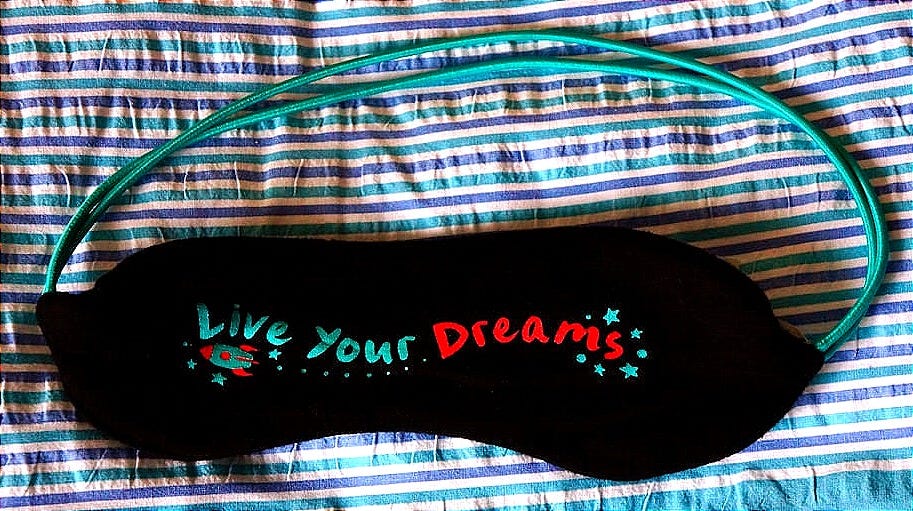
Sight — In addition to leveraging the power of naturally produced melatonin by being exposed to sunlight early in the day, throughout the day, and by mimicking sunset ahead of bedtime, sleeping in complete darkness can help you stay asleep. Consider blackout curtains, eye masks, and other tricks to decrease even small sources of light in your sleeping environment.
Sound — Sudden changes in noise from outside or inside your bedroom during sleep trigger your alertness reflex, making it difficult to fall back asleep. Decrease noise disruptions with white noise machines/apps or earplugs.
Touch — Body temperature affects sleep, & natural decreases in body temperature at night promote good sleep. Amplify this effect by warming yourself up before bed (e.g., a bath, shower, or tea) to support sleepiness as you cool down. Sleep with the room temperature at least a few degrees cooler than it is during the day, if possible.
Taste — Avoid caffeine (coffee, tea, soda) for 8 hours before bed to support sleep pressure. Finish eating 2-3 hours before getting into bed to improve digestion & decrease heartburn. Limit fluids for 2 hours before bed to prevent bathroom wakeups. While alcohol may appear to make it easier to fall asleep, alcohol actually disrupts deep sleep.
Other Factors to Consider
If you’re concerned about your sleep, energy levels, or health, please consult your doctor. Several medical conditions can be both symptoms and causes of poor sleep, including sleep apnea, restless leg, chronic pain, anxiety & related disorders, heartburn/reflux and other GI conditions, and any medical and/or medical cause of excessive nighttime urination.
Additionally, there are several other factors that I wasn’t able to cover in detail in this series, but I’ve linked to more information for the following sleep-related topics:
I hope this series has provided some helpful insights and, hopefully, some better nights of sleep for you!
Thanks for being here,
~Allison
Please remember that this information is meant to educate and inspire but is not medical advice - please consult your healthcare team to determine what is most appropriate for you.