


Update 11/26/25: A fiber-focused episode of The Drive, a podcast by Dr. Peter Attia, adds to my discussion about fiber and health. *Note, the first 20 mins of this episode is free to listen to and highly worth your time.
Welcome to Insight into Health, my new radio show on listener-supported KSVY 91.3, Voices of the Valley! I am your host, Allison McKeany, and these are the show notes for the live radio show that aired on October 27, 2025.
Listen to the episode:
Beyond the What:
Over the last couple of weeks, we’ve talked about calories, fat, and protein. If you missed those episodes, check out the linked show notes.
This week, I dove into an unsung hero of health — fiber.
Fiber is a type of carbohydrate, but it’s one that the body can’t digest. And that’s what makes it so special.
The two main types of fiber are Soluble and Insoluble:
Soluble fiber dissolves in water and forms a gel. This gel slows digestion and helps lower blood sugar and cholesterol levels. Soluble fiber is found in many foods, including oats, beans, apples, & flaxseeds.
Insoluble fiber, on the other hand, doesn’t dissolve in water. It adds bulk to stool and keeps things moving, which helps prevent constipation. Insoluble fiber is found in whole grains, bran, & vegetables.
Please remember, though, that just like protein and fat that we’ve discussed, most foods contain a mixture of both types of fiber.
Fiber plays several important roles in the body:
Gut Health
Insoluble fiber helps prevent constipation and may reduce the risk of diverticulitis, hemorrhoids, and even colorectal cancer.
Fiber is also a food source for the microbiome — that colony of healthy bacteria living in your large intestines that is involved in the immune system, digestion, nutrient absorption, and more.
Satiety
Fiber helps you feel satisfied more quickly and stay satisfied for longer.
High-fiber diets are consistently linked to lower body weight and reduced abdominal fat (which happens to be the most concerning type of fat for health).
Blood Sugar Management
Soluble fiber helps slow the absorption of sugar into the bloodstream, which prevents spikes and crashes.
Heart health:
A specific type of soluble fiber, beta-glucans found in oats and barley, form a gel in your gut that binds to cholesterol & lowers the “bad” LDL cholesterol that makes it to your bloodstream.
That’s why oats are often recommended for heart health (who out there has seen the marketing for Cheerios and oatmeal?)
How much fiber do you need?
Standard recommendations are a minimum for most of us: 25-28g/day for most women and 28-34g/day for most men.
The average intake in the US? Only 15g/day.
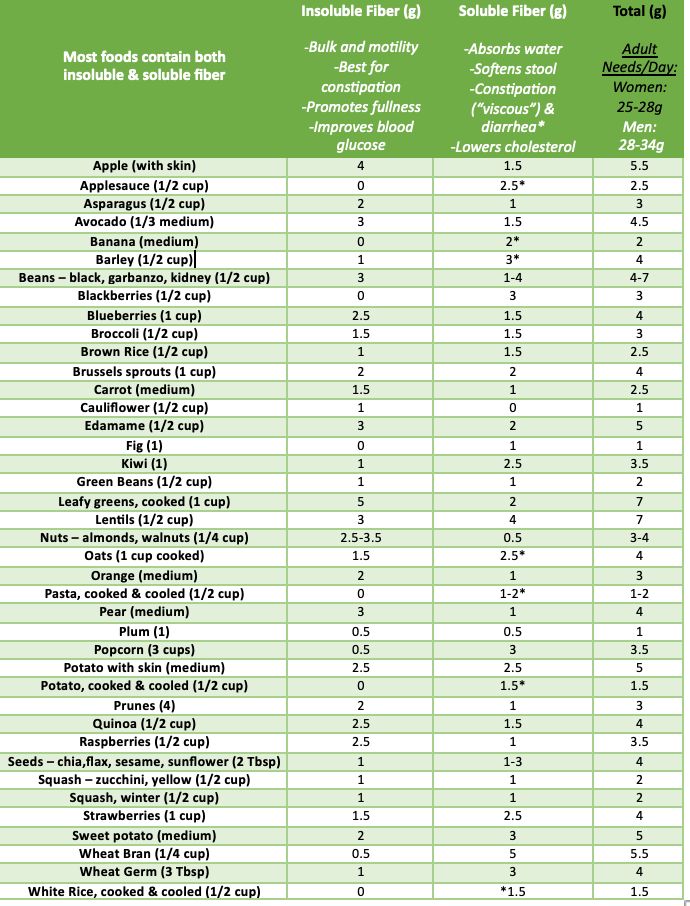
If you are curious about how much you are currently consuming, refer to this list:
If you decide to increase the amount of fiber you eat, here are a couple of “pro tips:”
Increase fiber slowly. Adding about 3g fiber per day every few days allows your digestive system to adjust and avoid any unpleasant GI side effects, like gas and bloating.
Drink plenty of fluid. Fiber does its job with the help of water, so increasing fiber without consuming enough fluid may backfire.
And, of course, listen to your body and speak with your healthcare team if you aren’t sure what is right for you.
Let’s Talk: Dad wisdom
I was joined by my dad, Don Steffy, as we discussed taking risks, saying “yes,” and finding your people.
Here’s What I’m… Eating on the Road
My dad and I discussed how we go about eating on the road — lots of snacks, restocking at grocery stores, and always being prepared. Inspired by a piece I published yesterday morning on putyourfoodtowork.com.
Thanks for being here,
~Allison