

Updated 11/26/25: A timely episode of Gastropod dives even deeper into the history of yogurt!
Welcome to Insight into Health, my radio show on listener-supported KSVY 91.3, where I explore ways to make healthy living realistic, enjoyable, and sustainable. I am your host, Allison McKeany, and these are the show notes for the live radio show that aired on November 17th, 2025.
Listen to the episode:
Beyond the What: Greek Yogurt & Lactose Intolerance
A big thank you to the person who sent in this question!
Why is Greek yogurt so popular?
And how can someone with lactose intolerance enjoy it?
If you have a question you’d like me to answer on-air, please email me at insightintohealth@gmail.com. I really love talking about what you all want to listen to.
Okay, let’s dig into Greek yogurt:
Growing up, traditional, thin yogurt dominated the market. But since the mid-2000s, Greek yogurt has been gaining traction and today makes up about half of all yogurt sales.
While both types of yogurt start with the same ingredients, the resulting products are very different in both taste and nutritional content.
All yogurt is made by heating milk, adding beneficial bacteria, and letting it ferment until it thickens. Here is where thin yogurt and Greek yogurt differ:
Traditional thin yogurt is ready after fermentation.
Greek yogurt is further processed by straining out some of the whey.
Whey is the liquid portion of milk that separates from the curds during yogurt and cheese making.
Whey contains water, carbohydrate (lactose!), and whey protein. The more whey that is strained off, the thicker and lower in carbohydrate the end product is.
Greek yogurt provides 2-3 times more protein per serving than thin yogurt, and nearly half the carbohydrates. For example, a 1-cup serving of Greek yogurt has about 20g of protein and less than 10g of carbohydrates. The same amount of thin yogurt has about 6 grams of protein and more than 20 grams of carbohydrates.
While both types of yogurt provide calcium and other nutrients, the type you choose is a matter of taste and the macronutrients you need it to provide.
You may recall a couple of weeks ago when I talked about the benefits of including protein, fiber, and healthy fats at most meals. In the case of yogurt, Greek yogurt counts as a protein, while traditional thin yogurts do not.
Let’s move to lactose:
Lactose is a natural sugar found in milk, made up of two linked simple sugars: glucose + galactose.
Lactose is broken down by an enzyme produced in the body, called lactase. I know, the language can be a bit confusing, but stick with me.
Lactose intolerance occurs when someone doesn’t produce enough lactase.
If undigested lactose reaches the microbiome, gut bacteria ferment it, producing excess gas and other gastrointestinal side effects.
But! Lactose intolerance is dose-dependent:
Oftentimes, people with lactose intolerance can tolerate a little bit of lactose but not a lot. A splash of milk in a coffee, for example, may not cause a problem. A tall glass, however, may cause a lot of discomfort.
Similarly, different dairy products contain varying amounts of lactose, so it is very common for people with lactose intolerance to tolerate some, but not other sources of dairy.
Fluid milk contains the most.
Yogurt and soft cheeses (e.g., ricotta and feta) have moderate amounts (remember that part of making cheese and yogurt involves straining off some of the lactose-containing whey).
Hard cheeses (cheddar, parmesan) have very low amounts of lactose.
When it comes to yogurt, the healthy bacteria used in yogurt fermentation digest some of the lactose, improving digestibility for those with lactose intolerance.
Additionally, since Greek yogurt is made by straining off some of the lactose-containing whey, it has less lactose overall than traditional thin yogurts.
The take-home message here is that the types of dairy foods someone with lactose intolerance can consume without discomfort are highly individual. Tolerance depends on the amount of lactose consumed, determined by portion size and/or type of dairy product.
If the listener who asked the question is indeed highly lactose intolerant, yet still wants to get the many benefits of Greek yogurt, I recommend checking out the many “lactose-free” versions of popular brands.
Lactose-free products are made by adding the lactase enzyme to the product during production so that the lactose is already broken down into glucose and galactose by the time it makes it into your digestive system.
I hope that helps! Please remember, the information provided here is informational and educational, and not intended to be health or medical advice. And please submit more of your questions to insightintohealth@gmail.com!
Let’s Talk: Anastasia Encarnation
I was joined by another pool acquaintance, Anastasia Encarnation. Anastasia teaches AquaFit and Ai Chi at our very own Sonoma Splash. Anastasia is passionate about functional movement and exercise — learning to move your body in space in a way that reduces pain, increases mobility, and promotes confidence and independence. She talked about why pairing this type of intentional movement with the benefits of a warm-water environment has been so good for so many of her students.
Here’s What I’m… Harvesting
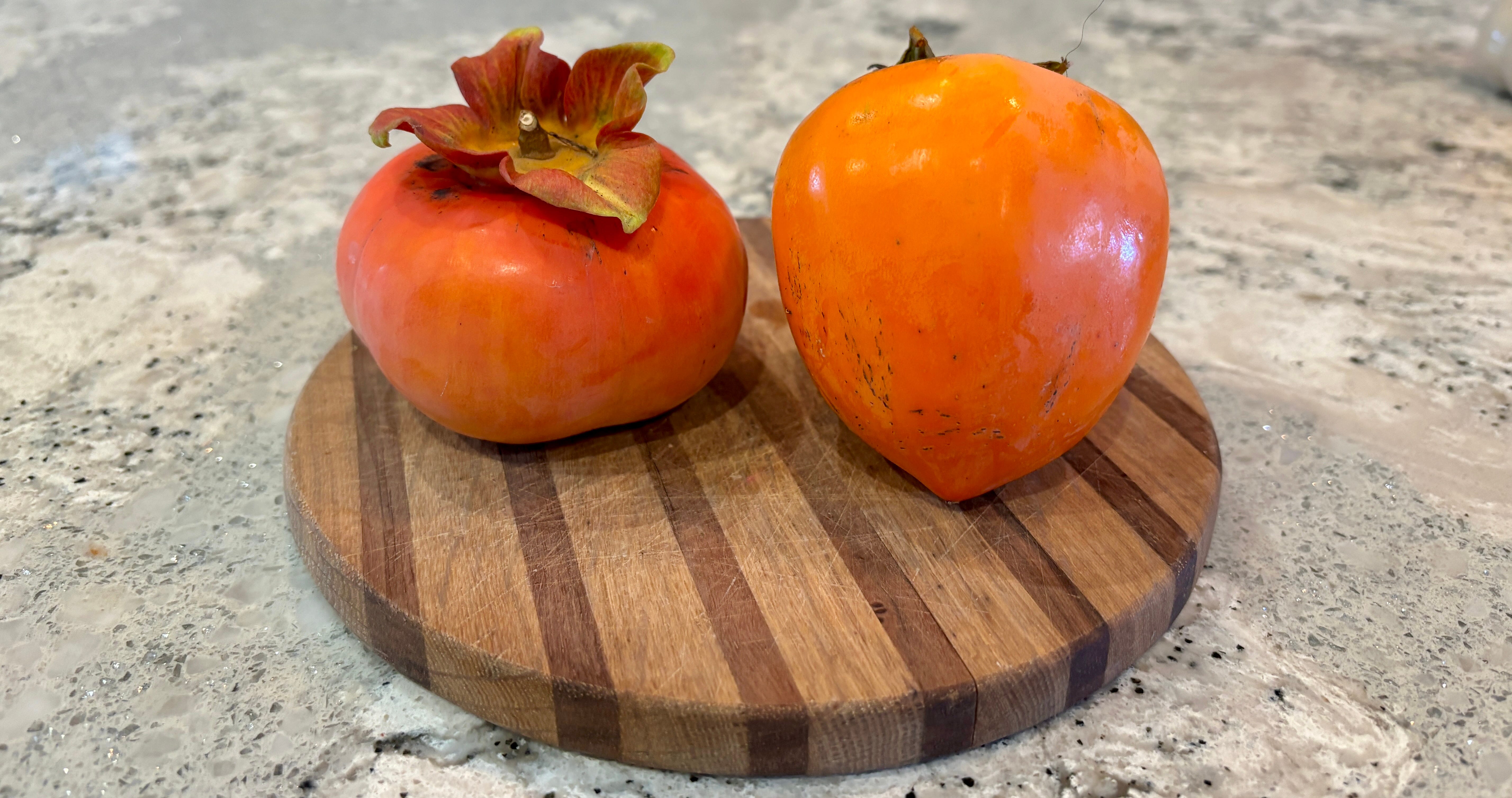
I’ve continued to be busy gleaning late-fall produce as part of the extrafood.org glean team. The produce that we harvest is donated to those in need right here in our community.
Right now, it’s persimmon season, and because not everyone is familiar with this seasonal fruit, below is some information that I put together for the recipients of our harvest.
There are two main types of persimmons we’ve been picking:
Fuyu Persimmons are round and squat. They’re the variety that can be eaten when raw and hard. There is no need to peel this variety before eating it like an apple, slicing it into salads, or making fall desserts.
Hachiya Persimmons (pronounced Ha-CHEE-ya) are acorn-shaped. This type must be fully ripe and soft before eating because the hard, raw flesh is mouth-puckeringly astringent.
Hachiya’s will continue to ripen at room temperature, faster if you put them in a paper bag with an apple.1
Once the flesh is the consistency of applesauce, it can be scooped directly out of the skin like a pudding or used in smoothies, cakes, or to make fruit leather.
Another idea from one of our gleaning homeowners is to wrap the ripe Hachiya in plastic wrap or foil, place it in the freezer, and when ready to enjoy, cut off the top and eat the flesh like a persimmon sorbet.2
I’ll be publishing a more in-depth piece about persimmons on putyourfoodtowork.com later this week.
Thanks for being here,
~Allison
Thanks to Kathy for this tip!
I’m excited to try this one!