

Welcome to Insight into Health, my radio show on listener-supported KSVY 91.3, where I explore ways to make healthy living realistic, enjoyable, and sustainable. I am your host, Allison McKeany, and these are the show notes for the live radio show that aired on December 29th, 2025.
Listen to the episode:
Beyond the What: Ultra-Processed Foods
While the term “Ultra-Processed Food” was coined in the early 2000s, it has grown in popularity in recent years.
It expands on the previously used “processed food” label, which was so broad that it included everything from canned beans and baby carrots to soda and sugary cereal.
Ultra-processed foods are defined as food products made from manufactured ingredients not used in home cooking, including food extracts, additives, and synthetic ingredients.
Examples of food extracts include high fructose corn syrup, protein isolates, and maltodextrin.
Examples of food additives include nitrites, carrageenan, and silicon dioxide.
Examples of synthetic ingredients (engineered, not natural) include artificial colors, flavorings, artificial sweeteners, and trans fats.
The NOVA system, a way of classifying foods based on how much a food has been processed, has gained traction since the 2010s.
The NOVA system has 4 categories:
Unprocessed foods and whole foods altered only by basic methods, like washing, cutting, freezing, or pasteurization.
Processed culinary ingredients used in home cooking, such as olive oil, salt, vinegar, and honey.
Processed foods made from Category 1 and Category 2 foods, such as fresh breads, cheese, or canned beans.
Ultra-processed foods (defined above)
Just a few minutes spent looking at the ingredient lists on foods in your pantry, fridge, and freezer will show you that these ultra-processed ingredients are everywhere.
It is also easy to see how ultra-processed foods make up over half of the standard American diet. A number that rises to nearly two-thirds for children and teens.
It isn’t our fault. These foods have been designed to be affordable, convenient, and highly palatable.
Isn’t the word “designed” an interesting one? It implies intent. And there is intent — the more of these ultra-processed foods someone eats, the more likely they are to crave and overeat them. And this is good for business. Not so good for health.
This is because ultra-processed ingredients are typically versions of added sugars, refined carbohydrates, salt, and saturated fats. Each of these alone is associated with increased risk of heart disease, diabetes, and several other chronic diseases we see today.
Plus, not only are these foods high in the nutrients that work against us, but they are also low in the nutrients that work for us, like healthy fats, fibers, and other essential nutrients.
Finally, the more ultra-processed food someone eats, the less likely they are to eat less processed, higher-nutrient-quality foods. A double whammy, if you will.
Now, the whole idea of ultra-processed foods and the NOVA system are far from perfect. Many argue that too much complexity and confusion will prevent consumers, providers, and policymakers from making necessary changes to how we feed ourselves.
Others argue there isn’t enough nuance. And this is typically because the NOVA system is based solely on the amount a food has been processed, or not. It doesn’t factor in nutrient content.
And while generally ultra-processed foods are not likely to be high in nutrients, that isn’t always the case.
Products like protein powders, drinks, and bars are considered to be ultra-processed because they are food extracts — extracted protein, that is.
Plant milks with emulsifiers to improve texture or added vitamins are also considered ultra-processed.
High-fiber cereals fortified with vitamins and minerals are ultra-processed, as well.
The conversation doesn’t end with the ultra-processed label alone.
It really comes down to awareness, making conscious decisions, and doing the best you can.
It isn’t about avoiding ultra-processed foods completely. Instead, it is about making your own conscious decisions about how you are feeding and fueling yourself.
Let’s Talk: Jennifer Briscoe, RN
Jennifer Briscoe and I recently reconnected at a local gleaning event. We had previously worked together at Sonoma Valley Hospital, where Jennifer was a nursing supervisor and I was the inpatient and then the outpatient dietitian.
Since leaving the hospital setting three years ago, Jennifer has expanded her approach to health and wellness and is now a Holistic Yoga Therapist, Certified Health Coach, and leads women’s circles in the Sonoma Valley. Her upcoming circle, “Wise Body: A New Chapter: A 6-week guide to menopause education, realness & sisterhood,” begins January 21st.
Here’s What I’m…Fermenting
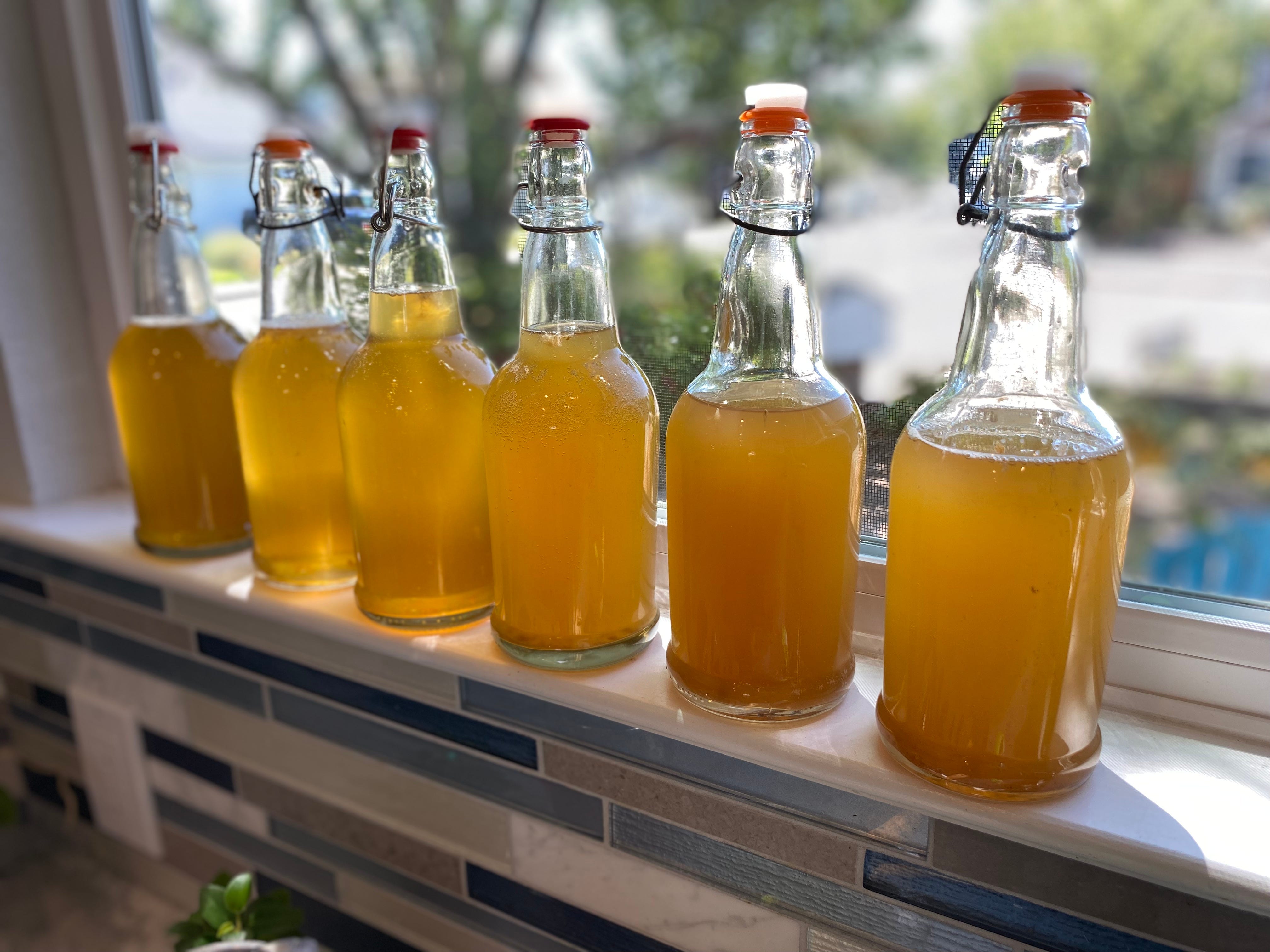
I first learned how to make kombucha at home in 2016. A friend set me up with my own SCOBY (Symbiotic Culture Of Bacteria and Yeast) in a half-gallon mason jar, which has grown into a crowded family of dozens of SCOBYs jam-packed into four large jars. During fermentation, the existing SCOBY develops a new layer. And these layers had gotten out of control!
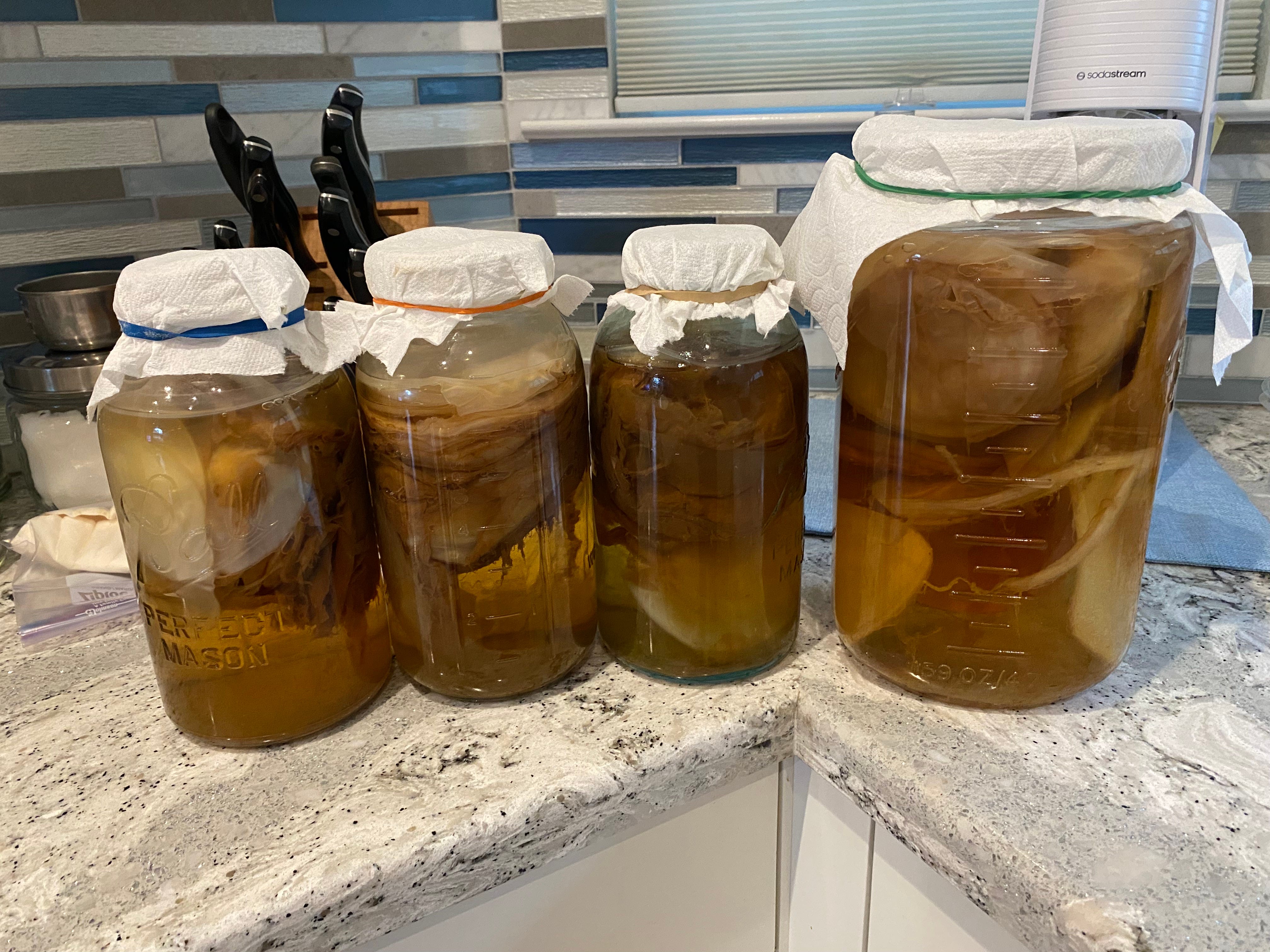
Instead of tossing the precious excess SCOBYs, I recently hosted a kombucha-making party at my house with several friends who have expressed interest in learning how to make kombucha over the years. After taste testing and reviewing homemade kombucha safety (sanitize, sanitize, sanitize!), each person left with their own jar(s) of SCOBYs to start their own happy kombucha-making family!
Thanks for being here. Please remember to send your questions and topic inquiries to insightintohealth@gmail.com or leave a comment below.
~Allison