

Bone health isn’t a priority for many of us until later in life.
This is unfortunate because the most critical time for bone health is when many of us think we are invincible: our teenage years.

What exactly is bone?
While it is easy to picture bone as a solid structure, it contains an inner “spongy matrix” that resembles honeycomb, surrounded by a hard outer shell.
Nearly half of bone is made of protein (specifically collagen) in addition to minerals such as calcium and phosphorus.
Unlike hair and nails, bone is alive and constantly being remodeled, meaning it is in a constant state of being broken down and built back up. An estimated 10% of your skeleton is being turned over in this fashion every year!
Bone provides the obvious structure and foundation for movement, but also plays an essential role in mineral storage and blood cell production.
Bone Throughout the Lifespan
The rate of bone remodeling depends on several factors, one of the most important being the stage of life:
Infancy and childhood: Bones are rapidly being built as part of the growth process.
Adolescence: Nearly 40% of total bone mass is accumulated during this window.
Early to late 20s: Peak bone mass is achieved.
Around age 30: Most people begin losing 0.5–1.0% of bone per year.
Menopause transition: For women, bone loss accelerates to 2–3% per year, as estrogen plays a protective role in bone health.
50s and beyond: Gradual bone loss continues, accompanied by an increased risk of fracture.
Why Peak Bone Mass Matters
Given the somewhat inevitable decline in bone mass over time, reaching maximum bone density in your 20s is a critical piece of lifelong bone health:
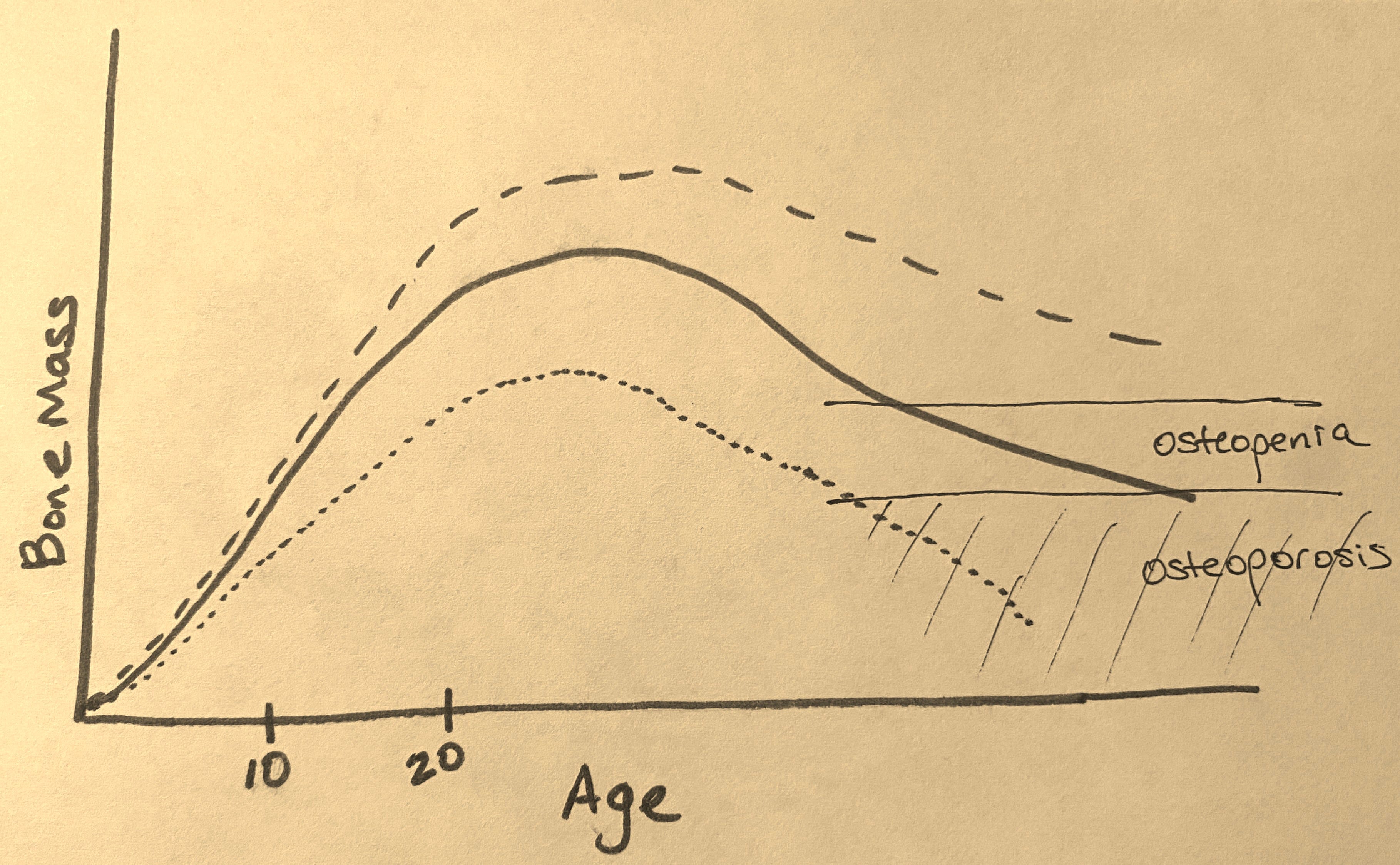
The challenge is that this bone-building window comes at a time when long-term health is rarely top of mind. Some of my most challenging nutrition conversations are with teenage audiences, as I try to find compelling ways to convince them that calcium-rich foods really are important.
While most of you reading this are likely beyond your peak bone-building years, there is still plenty you can do to slow bone density decline.
Bone Metabolism
Bone is alive and in a constant state of being broken down and rebuilt, a process known as remodeling. This complex cycle is fueled by nutrients and orchestrated by two key cells: osteoblasts and osteoclasts.
I know, I wish their names weren’t so similar either. Here’s how I remember them:
OsteoBlasts — B for Builders (build bone)
OsteoClasts — C for demolition Crew (break down bone)
During childhood, adolescence, and young adulthood, osteoblast activity dominates and bone mass increases. Starting around age 30, osteoclasts gradually outpace osteoblasts, and slow bone loss begins. In women, the loss of estrogen during and after the menopause transition accelerates this process by ramping up osteoclast activity.
Necessary Nutrients
If osteoblasts and osteoclasts are the construction and demolition crew, they rely on having access to supplies, delivery drivers, and apprentices. This is where vitamins and minerals come in.
Calcium — the star building block of bone
Vitamin D — required for calcium to be absorbed from your digestive system
Vitamin K — the K2 directs that absorbed calcium to your bones (and not somewhere less helpful, like an artery)
Zinc and Vitamin B12 — support the osteoblast builder cells
Magnesium — supports Vitamin D
While it might be tempting to rush out and buy supplements to cover all of the above, a food-first approach is the ideal way to ensure your body gets the most out of these nutrients. Remember, our bodies weren’t designed to absorb 100% of what we need in a single swallow.

The following is a quick reference guide to the vitamins & minerals involved in bone health, how much most people need, common food sources, and some things to think about when it comes to supplementation. This list is not all-inclusive. Please remember to check with your healthcare team regarding your specific needs:
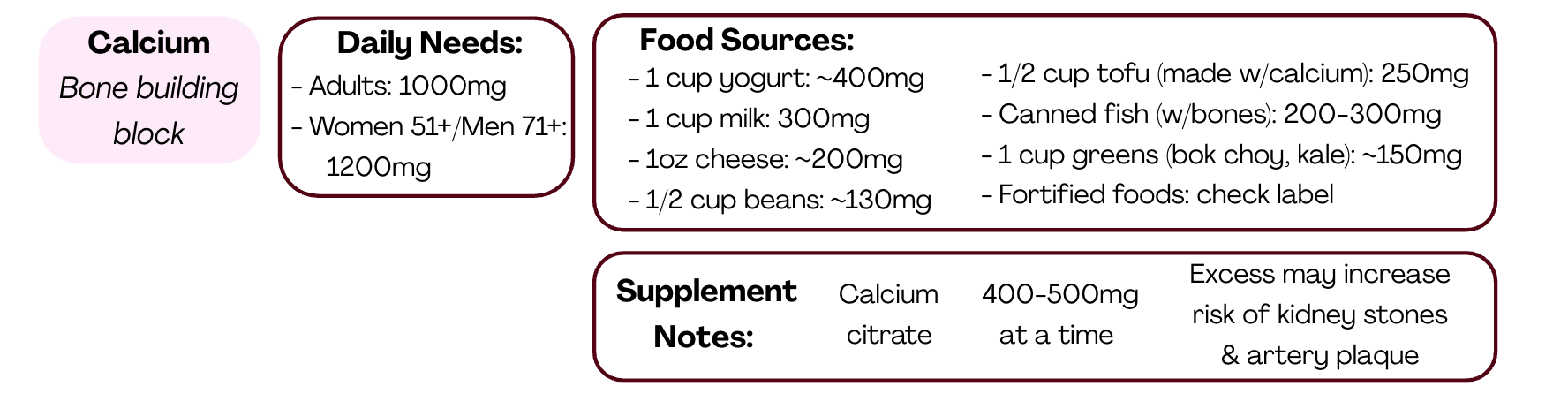
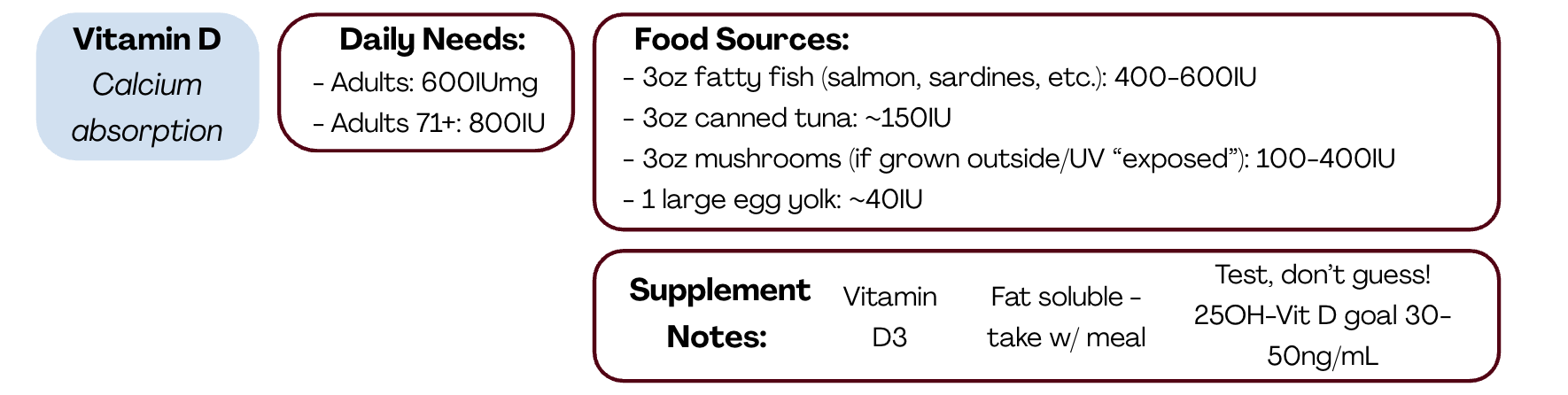


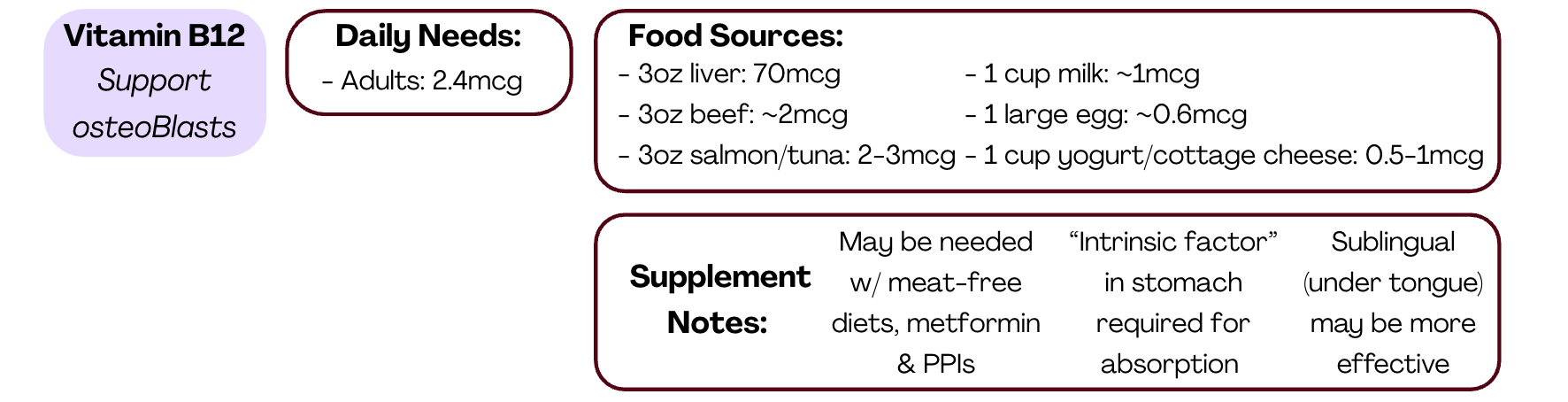
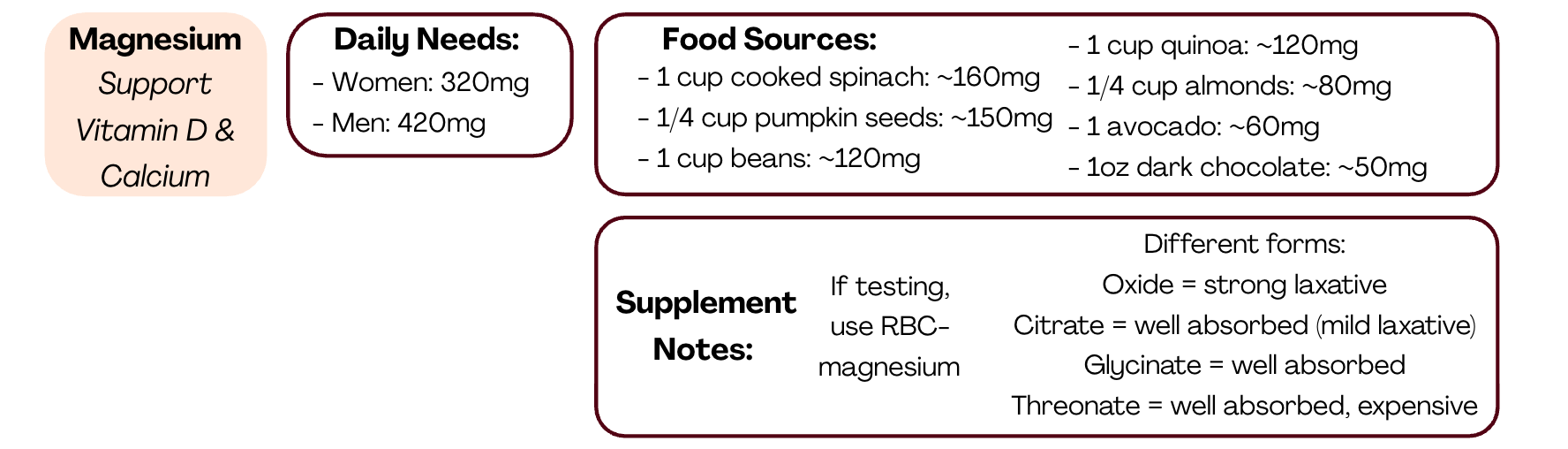
In my experience, the most commonly needed supplements for bone health are Vitamin D3 and K2, as both are difficult to obtain in meaningful amounts through food alone. Many supplements now conveniently combine them in a single pill.
I recommend basing Vitamin D3 dosing on blood test results (the 25-OH vitamin D test). If testing isn’t easily accessible, 1,000–2,000 IU of D3 daily is generally considered safe for most adults, but more is not always better, so testing is worth it.
Bone Fuel
Every process in your body requires energy. Energy that comes from food, which we call calories.
While calories often get a bad rap, energy is essential in fueling bone metabolism and is key to promoting healthy bones throughout life.
While consuming more calories than your body needs is a common concern, consuming an inadequate amount of calories (regardless of weight) also has risks. Inadequate energy intake increases the risk of low bone density, low muscle mass, as well as falls and fractures.
I’ve worked with many individuals who chronically underfuel themselves in an attempt to change the size of their body or to “get healthy.” Yet these often shortsighted attempts overlook the essential role of adequate energy for health, including bone health.
Protein Power
Protein is having its time in the spotlight. When it comes to bone health, adequate protein intake plays two important functions:
Provides the building blocks for bone collagen, which makes up roughly a third of bone mass.
Promotes building and maintenance of muscle mass, which acts as an important stimulus for bones to stay strong.
So how much protein do you need? That’s a hard question to answer for everyone reading this. As is the case with most health and nutrition topics, the amount you need is highly individualized and best calculated by a nutrition expert (dietitian!).
As a guideline, most adults benefit from starting with ~1.2 grams of protein per kilogram of body weight, using adjusted body weight for those with high body weight. (If you are thinking, “kilograms!?”, I hear ya. We are stuck in the metric system over here in healthcare…). This is ~0.54 grams of protein per pound of body weight.
Please remember that protein needs vary based on several factors, including age, activity level, and health status.1
Raising the Bar
Ok, we’ve gone through nutrition for bone health, but that is only half the story.
Your body responds to the demands you put on it, and bones are no different. If you don’t ask much of your bones, there is no reason to spend precious energy and resources to maintain them.
This is where resistance training comes in.2 When combined with adequate protein intake, resistance training builds and maintains muscle mass.
Because muscles connect to bone via tendons, the bigger, stronger, and more frequently those muscles are used, the more force the bone has to brace against. It is this demand that motivates your body to prioritize bone structure.

I’ve only recently started doing resistance training. If you are new to it, too, here are a few things to consider:
Resistance training is any movement that challenges your muscles to work. You do not need a gym membership or a barbell to get started! Bodyweight exercises like squats, lunges, and knee pushups count, as do resistance bands, free weights, and more. Here is an online resource I recommend to many of my patients who aren’t sure where to start.
To keep your bones motivated to stay strong, resistance training needs to be progressively more challenging. This means that as you gain strength, slowly increase the challenge by adding more resistance and/or trying different movements.
The ultimate goal is 2–3 strength/resistance sessions per week that work all major muscle groups.
Working with a professional to learn proper resistance training technique is well worth the investment to decrease the chance of injury.
Of course, check with your doctor first before starting a new exercise program, particularly if you have existing health conditions or known bone loss.
Prevention is the Best Medicine
Breaking a bone later in life can be serious and threaten independence, mobility, and, in certain cases, even increase the risk of death.
That being said, preventing a fall in the first place goes a long way toward protecting your bones and the rest of your body. Balance-focused activities such as tai chi, yoga, and single-leg exercises can help promote better balance, stability, and reaction time.
A few simple home modifications can prevent falls at any age: removing trip hazards like loose rugs and floor clutter, installing grab bars in the bathroom, and placing non-slip mats in the shower and on slippery floors. More home fall prevention tips here.
Thanks for being her,
~Allison
Please remember that this information is meant to educate and inspire but is not medical advice - please consult your healthcare team to determine what is most appropriate for you.
More about protein from Stanford Medicine
Strength training and resistance training are often used interchangeably. While strength training refers to the goal of getting stronger, resistance training refers to the type of exercise that results in strength.